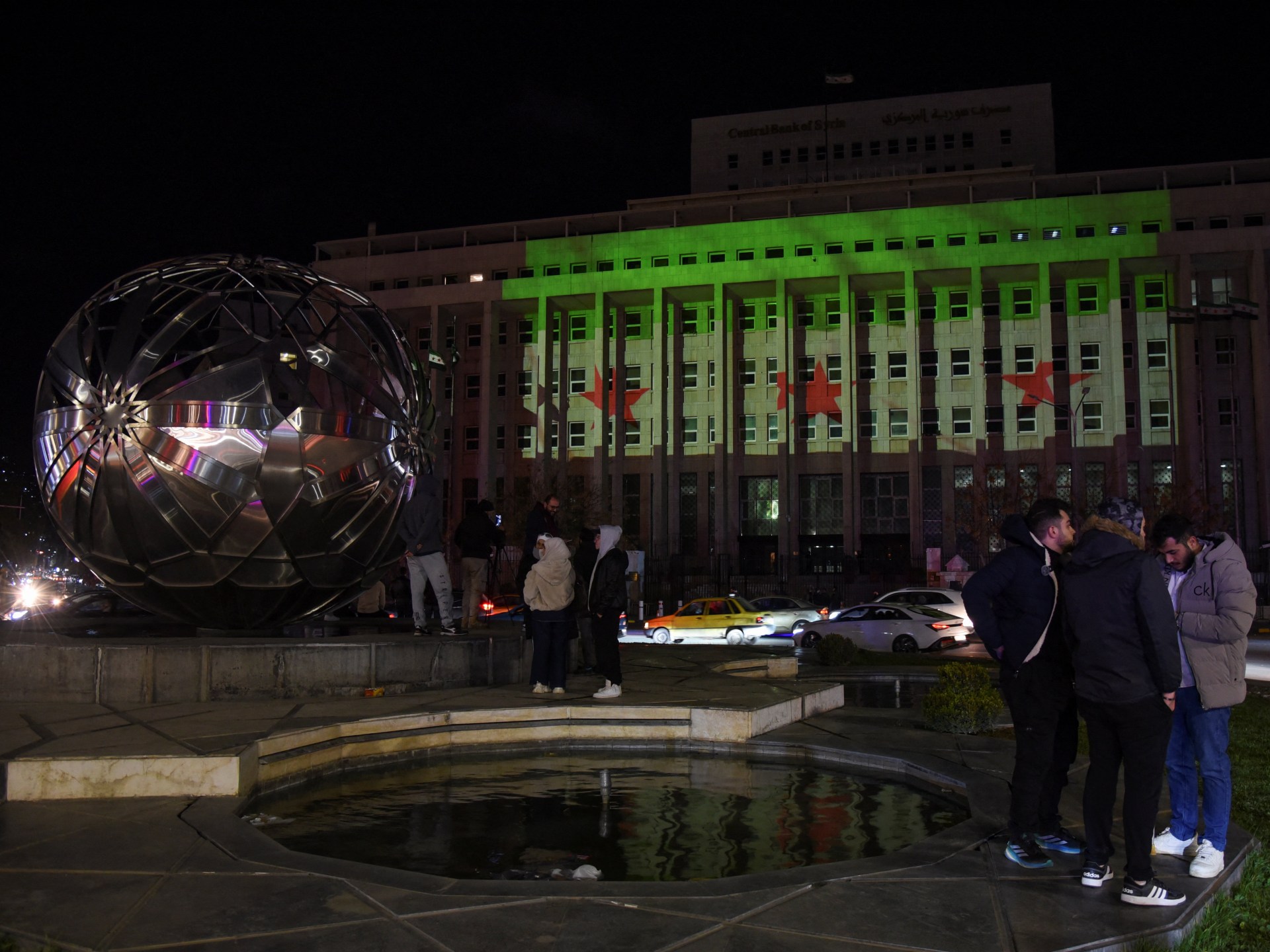

Damascus, Syria – Damascus had breathed a sigh of relief when a ceasefire between the Syrian government and the Kurdish-led Syrian Democratic Forces (SDF) was announced on the night of January 18. Fireworks lit up the sky, car horns blared and Syrians gathered in Umayyad Square to dance in jubilation.
The hope was that the conflict that flared up in the past few weeks in northern Syria was now over, and that the country had resolved one of the major issues still dividing it in the year since the overthrow of longtime leader President Bashar al-Assad.
- list 1 of 3US envoy meets SDF commander, calls for Syria ceasefire to be upheld
- list 2 of 3Day one of Syria’s ceasefire marked by violation claims
- list 3 of 3Israel bombs four Syria-Lebanon border crossings; kills 2 in south Lebanon
end of list
“It’s a beautiful feeling, and I am sure it exists in every Syrian … we wish for all of Syria to be united,” said one Damascus resident, Saria Shammiri.
Yet the celebration was short-lived.
Fighting resumed the next morning as the government’s lightning push forced SDF leader Mazloum Abdi to accept less favourable terms: a withdrawal from Raqqa and Deir Az Zor, in northeastern Syria, further east towards Hasakah, a new ceasefire, and a four-day ultimatum for the SDF to fully integrate into state structures.
Anger towards the SDF
As the clock ticks down on that deadline, in Damascus and other areas outside SDF control, frustration towards the Kurdish-led forces has hardened after 15 years of division.
“The terrorist SDF doesn’t belong to this land … they are not Kurdish. They are occupiers,” said Maamoun Ramadan, a 75-year-old Syrian Kurd living in Damascus.
For many here, the SDF is no longer seen primarily as a force that fought ISIL (ISIS) at the height of Syria’s war, but as an actor that entrenched a parallel authority backed by foreign powers, such as the United States, keeping large parts of the country beyond the central government’s reach.
Advertisement
In cafes, taxis and government offices, the language is increasingly blunt. The SDF is accused of delaying reunification, monopolising oil and agricultural resources in the northeast, and shielding itself behind US support while the rest of the country endured sanctions, collapse and war. The renewed fighting has reinforced a belief among many Syrians that the standoff could only ever end through force or submission. But, still, many want a peaceful resolution.
“Dialogue is the foundation of peace,” said Sheikhmos Ramzi, a butcher, “the solution lies at the negotiation table. Violence only brings more violence.”
Anxious wait
There is also an undercurrent of anxiety. While the prospect of reunifying territory is popular, few in Damascus are blind to the risks. A prolonged confrontation could draw in regional actors, unsettle fragile border areas, or reignite communal tensions in the northeast, where Arab tribal communities, Kurds, and others coexist uneasily after years of shifting alliances.
Some residents privately express concern about what integration will actually mean on the ground. Will SDF fighters be absorbed into national forces, sidelined, or prosecuted? Will local administrations be dismantled overnight? And can a central state, stretched thin after years of war and economic crisis, realistically govern and stabilise territory it has not controlled for more than a decade?
For now, however, those questions are largely drowned out by a dominant mood: impatience. The ceasefire was welcomed not as an endpoint, but as a step towards what many here see as an overdue resolution. The government’s advances are framed as restoring sovereignty, not opening a new chapter of conflict.
In Damascus, unity is the word repeated most often. But it is a unity shaped by exhaustion, resentment and the desire to finally close one of the last unresolved fronts of Syria’s long war.
Related News
UK to investigate Elon Musk’s Grok over ‘deeply concerning’ deepfakes
Israeli strikes kill two in Lebanon, UN forces report drone attack
US approves $2.3bn sale of torpedoes, air defences, aircraft to Singapore