
Eighty-six people have been arrested in the United Kingdom after gathering at a London prison in support of a Palestine Action-linked activist on hunger strike and in a perilous condition who is being held there, police say.
London’s Metropolitan Police wrote on X late on Saturday that officers were dispatched to Prison Wormwood Scrubs, where protesters “refused to leave the grounds when ordered to do so”.
- list 1 of 4Pro-Palestine activist on hunger strike says he will begin refusing water
- list 2 of 4Three Palestine Action activists end UK hunger strike
- list 3 of 4Prison rights, Elbit’s loss: How the Palestine Action hunger strike ‘won’
- list 4 of 4Five pro-Palestinian activists plead not guilty over UK airbase break-in
end of list
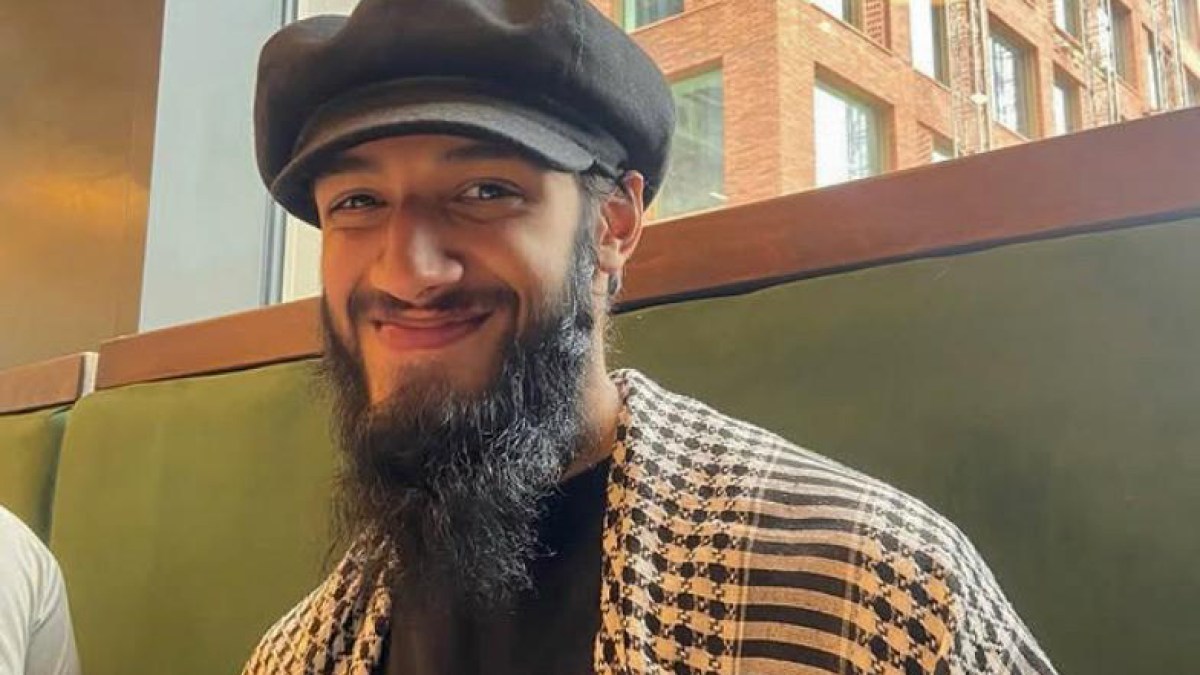
Inside Wormwood Scrubs is Umer Khalid, a 22-year-old pro-Palestine activist who stopped eating 16 days ago. He had been on hunger strike since November, briefly pausing in December due to severe ill health.
The group “allegedly blocked prison staff from entering and leaving, threatened police officers and a number managed to get inside a staff entrance area of a prison building”, the police said.
Videos of the incident verified by Al Jazeera show police officers shoving protesters to the ground and handcuffing them as shouts ring out in the background. Two groups of police also appeared to kettle protesters – a police tactic that involves officers surrounding and closing in on a group of demonstrators in an effort to contain them.
“Why are you assaulting me?” a woman can be heard asking at one point.
Those arrested were detained under suspicion of aggravated trespass, the police said.
Khalid told Al Jazeera last week that he planned to escalate his hunger strike to exclude all fluids starting on Saturday, the day of the protest.
After speaking with him on Monday by phone, Khalid’s mother, Shabana Khalid, told Al Jazeera that a prison guard remains outside his cell in case he needs urgent medical attention. She added that he is also being monitored closely with hourly medical observations.
Advertisement
“I’m reassured in one sense,” she said, “but the fact he’s on [hunger strike] still is quite scary. He’s starting to get tired. You can hear in his voice.”
Umer Khalid is among a group of five activists accused of breaking into the United Kingdom’s largest airbase, Brize Norton, in Oxfordshire in June and spray-painting two Voyager refuelling and transport planes. The group has pleaded not guilty.
At the time, the pro-Palestine protest group Palestine Action said two of its members were involved and red paint “symbolising Palestinian bloodshed was also sprayed across the runway and a Palestine flag was left on the scene”.
Within days, the UK government moved to ban the group under “antiterrorism” laws and made it illegal to support or promote the group.
The decision – which has been challenged in court and heavily criticised as “unjustified” by the United Nations – has led to multiple protests with hundreds of arrests in the months since.
Aside from Umer Khalid, seven other protesters have been involved in rolling hunger strikes since November.
Khalid became the only one still refusing food after three members of the group ended their protests this month. They said one of their demands had been met after a UK-based subsidiary of the Israeli weapons company Elbit Systems was denied a UK government contract.
“Our prisoners’ hunger strike will be remembered as a landmark moment of pure defiance; an embarrassment for the British state,” the Prisoners for Palestine Group said.
Two of the prisoners who concluded their hunger strikes, Heba Muraisi and Kamran Ahmed, were on the brink of death after more than two months without food. Still, Muraisi told Al Jazeera in the days before the announcement that she felt “it’s important to fight for justice and for freedom”.
The group’s list of demands includes bail, the right to a fair trial and the de-proscription of Palestine Action as well as for Elbit sites to be closed in the UK. They’re also seeking an end to what they call censorship in prison, accusing authorities of withholding mail, calls, books and visitation rights.
Before starting to refuse liquids on Saturday, Umer Khalid told Al Jazeera: “The only thing that seems to have any impact, whether that is positive or negative, is drastic action.”
“The strike reflects the severity of this imprisonment,” he added. “Being in this prison is not living life. Our lives have been paused. The world spins, and we sit in a concrete room. This strike reflects the severity of my demands.”
Advertisement
Related News
Syrian forces make rapid advance as SDF braces for Raqqa attack

Six missing after landslide hits New Zealand campsite
‘Alive or dead?’: Gaza families trapped in information void about relatives