
Nearly 62 million people living in the six Gulf Cooperation Council (GCC) countries have been caught in the crossfire of the latest US-Israel war on Iran.
Known for their economic opportunities, these countries, including Bahrain, Kuwait, Oman, Qatar, Saudi Arabia and the United Arab Emirates (UAE), collectively host nearly 35 million foreign workers from around the world, predominantly from South Asia.
- list 1 of 4Iran to halt strikes on neighbours unless attacks from there: Pezeshkian
- list 2 of 4UAE president says prepared to confront ‘threats’ as Iran attacks continue
- list 3 of 4Iran war: What is happening on day nine of US-Israel attacks?
- list 4 of 4How targeting of desalination plants could disrupt water supply in the Gulf
end of list
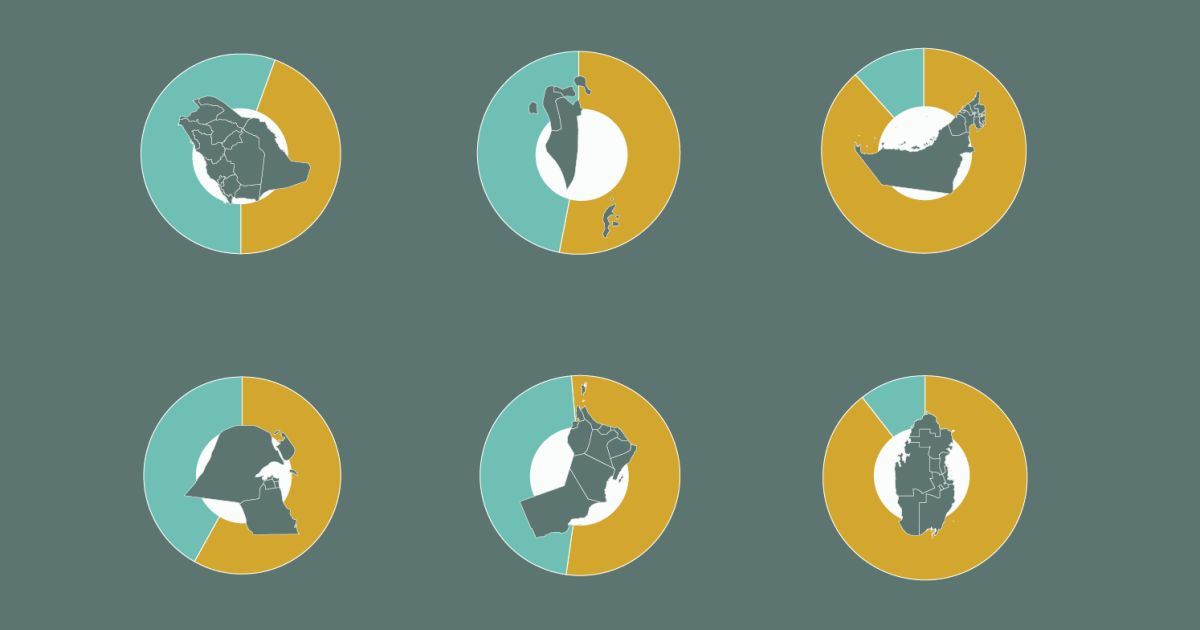
With the exception of Saudi Arabia and Oman, foreign workers make up the bulk of the populations of people living in the remaining four GCC countries.
The map below illustrates the national and non-national populations in each of the GCC countries.

Where do GCC foreign workers come from?
Generations of foreign workers in the GCC countries have significantly contributed to the workforce, including labourers, construction workers, household staff, security personnel, and cleaners, all vital to building the modern infrastructures that Gulf nations are known for.
Millions consider the Gulf their home, despite holding nationalities from other countries.
Additionally, highly skilled foreign workers have a long history in industries such as banking, finance, technology, engineering, aviation, medicine and the media.
According to Global Media Insight, a digital marketing agency based out of the UAE, the 10 largest groups of non-nationals living across the six GCC countries are from:
- India: 9.1 million
- Bangladesh: 5 million
- Pakistan: 4.9 million
- Egypt: 3.3 million
- Philippines: 2.2 million
- Yemen: 2.2 million
- Sudan: 1.1 million
- Nepal: 1.2 million
- Syria: 694,000
- Sri Lanka: 650,000

Saudi Arabia
Saudi Arabia is the largest of the six GCC countries, with a population of nearly 37 million.

The oil-rich country has a local population of about 20.5 million and an additional 16.4 million foreign residents.
Advertisement
The five largest groups of non-nationals living in Saudi Arabia are people from:
- Bangladesh: 2,590,000
- India: 2,310,000
- Pakistan: 2,230,000
- Yemen: 2,210,000
- Egypt: 1,800,000
- Sudan: 1,000,000
The UAE
The United Arab Emirates has the second-largest population in the GCC, totaling some 11.3 million people.

It consists of seven emirates, including the capital Abu Dhabi, Dubai, Sharjah, Ajman, Umm Al Quwain, Ras Al Khaimah, and Fujairah.
Emiratis make up nearly 12 percent of the population, with foreigners at almost 88 percent.
The five largest groups of non-nationals living in the UAE are from:
- India: 4,360,000
- Pakistan: 1,900,000
- Bangladesh: 840,000
- Philippines: 780,000
- Iran: 540,000
- Egypt: 480,000
Kuwait
With a population of 4.8 million, Kuwait has the third-largest population in the GCC.

Approximately 1.56 million are Kuwaiti citizens, and 2.16 million are foreign workers.
The five largest groups of non-nationals living in Kuwait are from:
- India: 1,000,000
- Egypt: 700,000
- Bangladesh: 350,000
- Philippines: 250,000
- Pakistan: 200,000
- Nepal: 120,000
Oman
Oman’s population stands at approximately 4.7 million people. Oman’s 2.5 million citizens account for nearly 59 percent of the population, while the remaining 2.05 million (or 41 percent) are foreign workers.

The five largest groups of non-nationals living in Oman are from:
- India: 766,735
- Bangladesh: 718,856
- Pakistan: 268,868
- Egypt: 46,970
- Philippines: 45,213
- Uganda: 20,886
Qatar

Qatar has a population of some 3.2 million people, with 2.87 million foreign workers accounting for about 88 percent of them. Qatari citizens number around 330,000, making up 12 percent.
The five largest groups of non-nationals living in Qatar are from:
- India: 700,000
- Bangladesh: 400,000
- Nepal: 400,000
- Egypt: 300,000
- Philippines: 236,000
- Pakistan: 180,000
Bahrain
With a total population of 1.58 million, Bahrain has the smallest population in the GCC. Bahraini citizens make up just under half of the population.

The five largest groups of non-nationals living in Bahrain are from:
Advertisement
- India: 350,000
- Bangladesh: 150,000
- Pakistan: 120,000
- Philippines: 80,000
- Egypt: 60,000
- Nepal: 35,000
Related News
Are US-Israeli attacks against Iran legal under international law?

Hong Kong appeals court overturns Jimmy Lai’s fraud conviction
US-Israel war on Iran: A brief history of mission creep and false promises