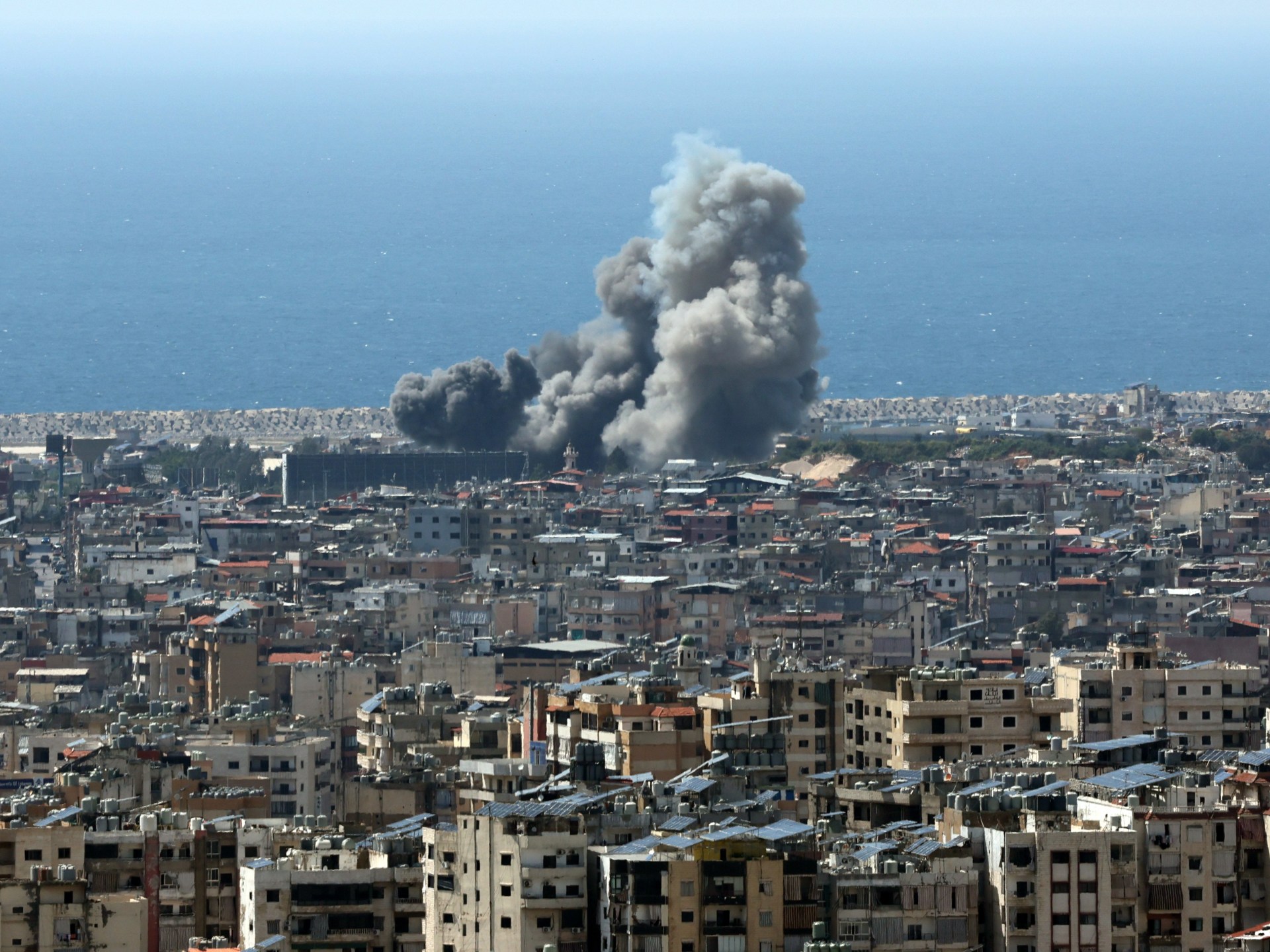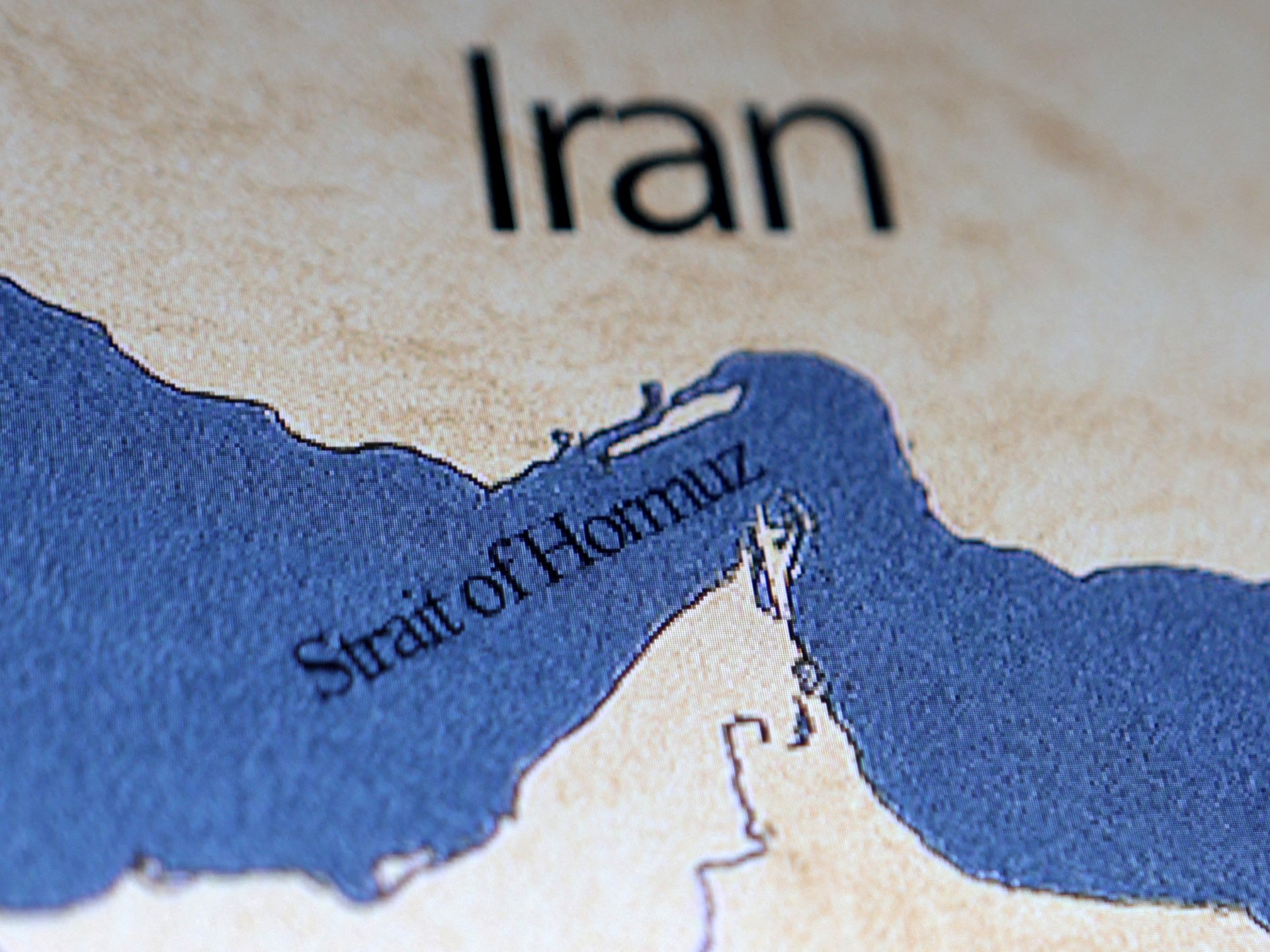

Nearly two months into the US–Israel war on Iran, the conflict has killed thousands of people and disrupted major energy flows. At the centre of the crisis is the Strait of Hormuz, the vital chokepoint where about 20 percent of the world’s oil supplies normally flow, which has been repeatedly restricted or threatened with closure by both parties, Iran and the US.
During the war, many of the words and terms dominating the headlines carry deeper historical, religious, or political meanings.
- list 1 of 3Cash shortages grip Yemen despite currency stabilisation
- list 2 of 3Iran’s supreme leader warns of ‘new bitter defeats’ for US and Israel
- list 3 of 3Iran, US still ‘far’ from breakthrough amid Strait of Hormuz impasse
end of list
Here are ten key terms shaping the language of the war and what they mean.
Hormuz
The Strait of Hormuz is the narrow waterway between Iran and Oman, connecting the Gulf to the Arabian Sea. It is one of the most strategically important maritime routes in the world. Since the start of the war, access to the strait has been heavily restricted, with periods of partial or near-total closure.
The exact origin of the name Hormuz is contested; however, the most widely accepted theory links it to the Middle Persian form of “Ahura Mazda,” the supreme deity in Zoroastrianism, whose name means “Wise Lord” or “Lord of Wisdom.” This connection may date back to the Sasanian period or earlier stages of Persian linguistic development.
Less widely accepted theories suggest alternative origins, including a local Persian derivation combining “hur” (stagnant water or marsh) and “mogh” (date palm), implying a “place of dates”, or a possible link to the Greek word “hormos” meaning “cove” or “bay.”
Historically, the Kingdom of Hormuz, a minor state in the medieval period, was believed to be a wealthy maritime kingdom centred around the present-day Strait of Hormuz, with influence extending westward towards Bahrain.

Shahed
Shahed drones are Iran’s low-cost loitering munitions, often described as “kamikaze drones” or unmanned aerial vehicles that carry an explosive payload while relying on relatively simple, low-tech components. Iran has used them since the beginning of the war to target Israel and Gulf countries. These drones typically fly at low altitudes and are often launched in large swarms to overwhelm air defences, forcing costly interception efforts.
Advertisement
The word “Shahed” is of Arabic origin and means “witness.” While the word is originally Arabic, it is also fully integrated into the Persian language, Farsi, where it carries the same meaning.

Tomahawk
Originally, the word “tomahawk” referred to a versatile, single-handed axe or hatchet historically used by Indigenous peoples of North America for hunting, woodworking and combat. According to the Online Etymology Dictionary, the term comes from an Algonquian language (often cited as Powhatan tamahaac), meaning “a cutting tool” or “that which is used for cutting”.
In modern military usage, it refers to the Tomahawk cruise missile, a long-range, all-weather missile developed by the United States. Considered one of the world’s most precise cruise missiles, it can strike targets from over a thousand miles away.
Rights groups have suggested that a Tomahawk missile likely struck a school in Minab in Iran early in the war, killing close to 170 children.
Minab
Minab, where the “Shajareh Tayyebeh” (“The Good Tree”) school is located, is known for its lush agricultural landscape and is often described as an “oasis.”
Situated near the Strait of Hormuz, the city is particularly noted for its citrus fruits and dates.
The origin of the name “Minab” is not definitively established, but is commonly believed to derive from Persian elements meaning “azure water” or “clear water”, possibly reflecting the region’s historical association with fertile land and water sources.
Some Iranian sources offer an alternative explanation, linking the name to Qalʿa-ye Minā (“Mina Castle”), one of several historical fortifications in the region. In this interpretation, according to Encyclopaedia Iranica, mina is associated with meanings such as “blue” or “enamel,” giving rise to translations such as “the Blue Fort”, though this remains speculative.
Bab al-Mandeb
The Bab el-Mandeb, literally “the Gate of Tears” or “Gate of Grief” (from Arabic bab meaning “door” or “gate” and mandab associated with lamentation or sorrow), is a narrow strait connecting the Red Sea to the Gulf of Aden.
Located between Yemen and Djibouti, the Bab al-Mandeb Strait is the only southern entrance to the Red Sea from the Indian Ocean and connects to the Suez Canal, facilitating trade between Asia and Europe.
Since the start of the war, the Houthis, the Iran-aligned group which controls much of Yemen’s populous northwest and the capital Sanaa, have repeatedly threatened to disrupt or close the strait, highlighting its role as a critical chokepoint for global commodities.
Advertisement
Epic (Fury)
Operation Epic Fury is a codename used by Washington for its joint military campaign with Tel Aviv against Iran, launched on February 28, and frequently employed in official White House statements since the start of the war.
The word “epic” originates from Ancient Greek epos, meaning “word”, “tale”, or “story” and is also associated with meanings such as “promise”, “prophecy”, “proverb” and poetry in heroic verse. The term entered the English language through French épique, and its extended sense of “grand” or “heroic” was recorded in English by 1731.
The word “fury”, on the other hand, comes from Latin furia, meaning “rage” or “madness.” In Roman mythology, the Furiae were the counterparts of the Greek Erinyes. According to the Online Etymology Dictionary, the term also refers to these avenging deities, who were believed to be sent from Tartarus to punish wrongdoers.
Together, Epic Fury stands for “heroic rage” or “rage of epic proportions”.
Ayatollah
Ayatollah is a high-ranking title within different sects in Shia Islam, given to senior clerics recognised for their expertise in Islamic jurisprudence, theology and religious scholarship. The term is derived from the Arabic words ayah, meaning “sign” or “miracle”, and Allah meaning “God”, together meaning “Sign of God.”
Ayatollahs are typically scholars who have reached an advanced level of study in religious seminaries and are qualified to interpret Islamic law. The title is most commonly associated with Iran, where senior clerics have played a central role in both religious and political life, particularly since the Iranian Revolution.
Iran’s Supreme Leader, Ayatollah Ali Khamenei, was killed on February 28, and succeeded by his second son, Mojtaba Khamenei.
Kharg
Kharg Island, sometimes referred to as a “forbidden island” due to restricted access and its strategic importance, is a small island in the Gulf that is Iran’s primary oil export terminal.
The name “Kharg” is of uncertain origin, likely deriving from an older Iranian or pre-Islamic language, though its exact meaning remains unknown. Some interpretations link it to older Iranian roots that may refer to a “warm” or “hot” place, possibly reflecting the island’s climate defined by intense heat, though this remains speculative.
Known as the country’s most important oil export hub, the island endured heavy bombardment during the Iran-Iraq War before being rebuilt by Iranian authorities.
In March, a large-scale US air operation targeted Kharg Island, hitting more than 90 military sites, with strikes avoiding energy infrastructure.
Kafir
The word “kafir” gained attention during the war with Iran after the US defence secretary, Pete Hegseth, was photographed with an Arabic tattoo on his arm.
Often translated as “infidel” or “non-believer”, the term more literally means “one who conceals” or “one who covers the truth”. It derives from the Arabic root k-f-r (ك ف ر), from the verb kafara, meaning “to cover”, “to conceal”, or “to hide”. The word and its related forms, including plural forms “kuffar” and “kafirun”, appear numerous times in the Quran.
Advertisement
Khatam Al Anbiya
The central headquarters of Iran’s Islamic Revolutionary Guard Corps (IRGC), named Khatam al-Anbiya, takes its name from an Arabic phrase meaning “Seal of the Prophets”. The term derives from khatam, meaning “seal” or “signet ring”, and al-anbiya, meaning “the prophets”.
Its spokesperson, Ebrahim Zolfaghari, has mocked US president Trump, at one point echoing his signature “You’re fired!” catchphrase and rhetorical style.
The term, in a similar form “khatam an-nabiyyin”, appears originally in the Quran in reference to the Prophet Muhammad, who is described as the “Seal of the Prophets”.
Related News

Empty ships and shut wells: Why the Iran war oil crisis is not over yet
Iran, US both claim victory, but did they actually concede ground?

Lula asks US to send ex-intelligence chief to Brazil after ICE arrest