
Russia has urged foreigners to leave in Ukraine’s capital Kyiv, and warned of more strikes on the city, suggesting a major escalation in its more-than-four-year-long war on Ukraine.
In a statement issued on Monday, Russia’s Ministry of Foreign Affairs said it planned to target “decision-making centres and command posts” and drone manufacturing facilities in the Ukrainian city in a series of strikes.
- list 1 of 3Russia labels Ukraine attack in occupied Luhansk ‘monstrous crime’
- list 2 of 3Why is Trump deploying 5,000 troops to Poland?
- list 3 of 3Zelenskyy says ‘time is right’ for Ukraine to start process of joining EU
end of list
Due to these facilities being allegedly “scattered throughout Kyiv”, Moscow told “foreign citizens, including personnel of diplomatic missions and international organisations, to leave the city as soon as possible”, the statement read.
The ministry’s statement also urged Kyiv residents to avoid all military and administrative infrastructure facilities in the capital, which could be potential targets.
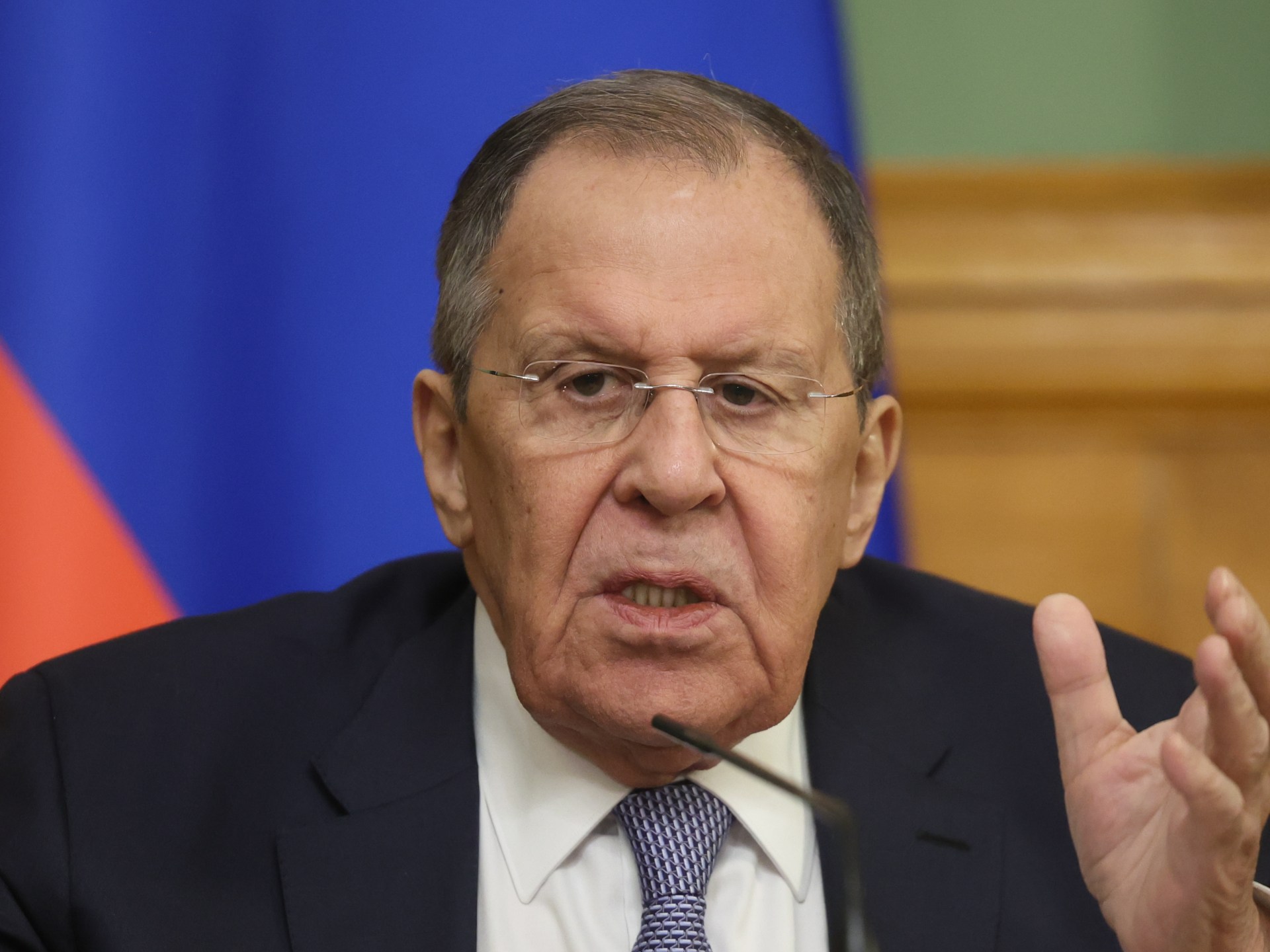
A later statement said that Russian Foreign Minister Sergey Lavrov had advised US Secretary of State Marco Rubio of the plan and urged him to evacuate his embassy staff from Kyiv.
Moscow said these planned strikes were in response to a drone strike on a student dormitory in Starobilsk, in the Russian-occupied Luhansk region of Ukraine, which killed at least 18 people.
The threats come just days after Russian drone and rocket strikes on Kyiv on Saturday night killed at least four people and injured about 100 others.
What is behind Russia’s latest threats, and how significant are the threats to foreigners in Kyiv?
Here’s what we know:
Why is Russia threatening to attack Kyiv?
Ukraine has greatly improved its drone warfare capabilities in recent months, leading to more successful targeting of Russian military and energy infrastructure.
Advertisement
Most of these drones are homegrown interceptors, which have been designed to pursue attack enemy unmanned aerial vehicles (UAVs) before they hit their targets.
They can also carry a wider range of payloads and do not self-destruct, unlike one-way drones, so they can be used again in future missions.
On May 17, at least five people were killed after Ukraine launched what Russian officials described as one of the largest drone barrages of the war, with waves of UAVs dispatched to Moscow and several other regions overnight. The Indian embassy in Russia said one Indian worker was killed and three others injured in drone strikes in the Moscow region.
Moscow region’s Governor Andrei Vorobyov added that a woman was killed after a drone slammed into a house in Khimki, north of Moscow. Vorobyov added that apartment buildings and infrastructure sites were damaged in the attacks.
The Russian foreign ministry statement on Monday labelled the Staroblisk attack as a “flagrant disregard for international humanitarian law”, and “yet another blatant demonstration of the Nazi and terrorist nature of the Kyiv regime”.
What has Ukraine said?
Ukraine’s military has denied responsibility for the strike on the student dorm, saying it had struck an elite drone command unit.
Since then, Russia has also heavily targeted Kyiv and its surrounding areas with massive missile and drone attacks. resulting in at least four people killed and more than 60 injured overnight Tuesday and Wednesday.
On Monday, Ukrainian officials also reported that strikes killed several people in the eastern Kharkiv and Donetsk regions.
While both Russia and Ukraine have repeatedly launched attacks on one another’s cities, this was the first time Moscow had issued a direct warning to foreigners in Ukraine.
Commenting on this threat, Ukraine’s Foreign Minister Andrii Sybiha urged allies not to give in to “Russian blackmail”.
French Ambassador Gael Veyssiere noted that people in Kyiv were going about their daily lives on Monday, after the weekend’s strikes.
“It’s a way to demonstrate resilience, and I think it’s extremely important that we, around the world, we would support that,” Veyssiere told the Reuters news agency.

According to Philip Bednarczyk, the German Marshall Fund of the United States’ Warsaw office director, Russia’s latest threat comes after “its attempts to break Ukraine’s will to fight over the course of the coldest winter during this war failed”.
Advertisement
“It is becoming clear that their war aims are not being met on the front lines, and conversely, Ukraine has taken an upper hand. Russia needs to change tactics and the narrative somehow, and this warning is an attempt to do so,” he told Al Jazeera.
Russia and Ukraine have been holding peace talks since the war began in February 2022, but with little or no concrete outcomes.
When Donald Trump became the president of the US for the second time in January 2025, he promised to end Russia’s war in Ukraine.
He has since met both Russia’s President Vladimir Putin and Ukraine’s President Zelenskyy in separate meetings to discuss ending the war, but so far these efforts have not borne fruit.
The truce talks have largely stalled due to Russia’s insistence on keeping territory it has seized from Ukraine.
On May 22, US State Secretary Marco Rubio said that while trilateral talks had been unsuccessful, the United States was ready to organise a new round of peace talks.
But Washington has also been occupied with its war on Iran, which broke out on February 28, and analysts say EU nations might have to play a bigger part in peace talks between Moscow and Kyiv.
“Unfortunately, US attention from this administration was not able to bring peace, and it looks that attention has gone towards other parts of the world, like Iran,” Bednarczyk said.
“Europe will have to take up that role, and I believe is capable of doing so, but it is extremely important to have American backing.”
But he was also sceptical about how serious Russia is right now about peace. “After all, this is their war of choice,” he said.
Related News
Cautious optimism in Lebanon as direct talks with Israel progress

Peru presidential candidate Roberto Sanchez charged with financial crimes

Economic confidence plummets in US amid Iran war, poll shows