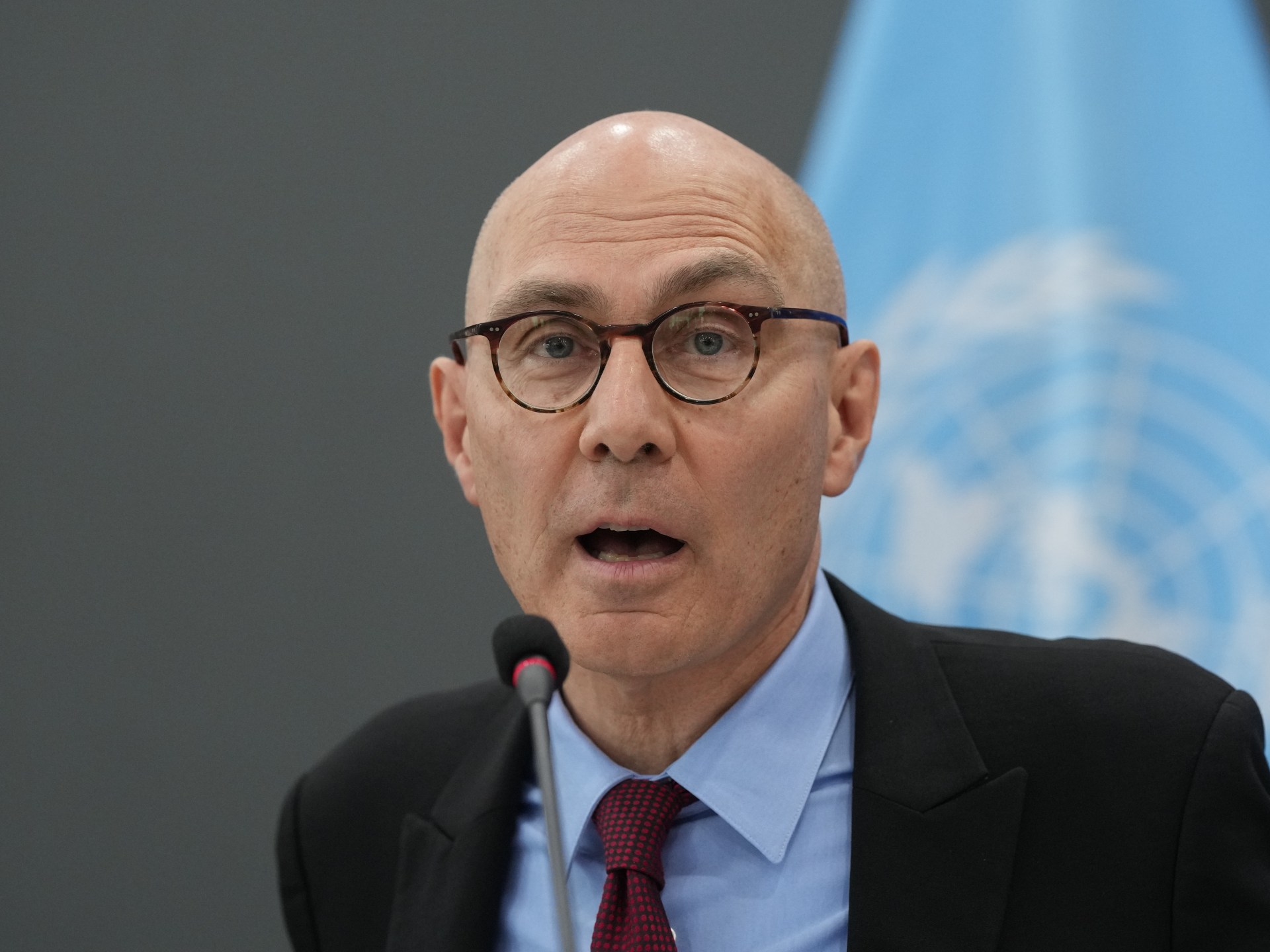

The United Nations High Commissioner for Human Rights has called for urgent action to protect children online, demanding it be made a “priority”.
In a statement released on Friday, Volker Turk called for stronger action by governments and tech companies to make online platforms safer.
- list 1 of 4US-Iran 60-day proposal: What we know
- list 2 of 4WHO chief visits DRC amidst Ebola crisis
- list 3 of 4‘Dangerous colonial occupation’: Israel’s digital West Bank land register
- list 4 of 4Australian court sets August date for ‘mushroom murderer’ appeal hearing
end of list
“Enhancing protection of children online is an urgent priority,” he insisted.
The call comes amid a global push for greater accountability and oversight of social media platforms, with countries testing age-based bans and stricter regulations, and pressure growing on technology companies.
Alongside the statement, the UN human rights office released a set of guidelines aimed at improving children’s safety online and protecting their rights through stronger regulation.
The measures include safeguards around age verification processes, mandatory child rights impact assessments, and involving children in shaping regulatory responses.
“We need much wider action – by governments and companies – to ensure that the platforms themselves are made safer by design, that data is protected, that those responsible for harm can be held to account, and that children’s rights and needs are fully respected throughout,” Turk said.
“Whatever regulations are adopted, it is essential to avoid inadvertently causing further harms. For example, age verification done wrong can both fail at its goal and endanger the privacy of both kids and adults,” he added.
Turk added that regulations focused only on the age of users risk leaving unchanged the design choices and algorithmic practices that make platforms unsafe in the first place.
Advertisement
Restrictions on children’s access to social media have proliferated globally following Australia’s adoption of legislation restricting access for children under 16 in December 2025.
Indonesia and Malaysia have also introduced age-based restrictions, while across Europe, many countries are also considering limiting children’s access to social media.
Austria said in late March that it plans to ban social media for children under the age of 14, with draft legislation expected to be finalised by June. Denmark and France are also set to ban social media platforms for children under 15.
Spain’s prime minister announced in early February that the country plans to ban social media for children under 16, while the United Kingdom is weighing similar restrictions.
However, some child safety experts say bans alone do not go far enough, calling instead for tighter regulation requiring technology companies to better moderate harmful content and platform design.
Chris Sherwood, chief executive of Britain’s National Society for the Prevention of Cruelty to Children, has previously called on governments to “ensure harmful content is blocked at the source” and for “platforms no longer using design tricks that keep teens hooked”.
Related News

Finland ends drone alert amid regional fears of Ukraine war overspill
Iran war live: Tehran says diplomacy continues but no deal yet with US
Iran war day 82: Tehran warns of ‘new fronts’ as Trump sets deadline