207 People Have Been Killed In US Military Boat Strikes In The Caribbean And Pacific Waters
 08 June 2026
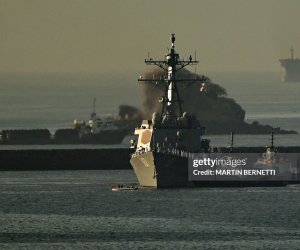


NEWS AMERICAS, NY, NY, Mon. 8, 2026: Since September 2025, the US military boat strikes in the Caribbean Sea and eastern Pacific Ocean has killed at least 207 people – in what legal experts are describing as an unprecedented and potentially illegal campaign of extrajudicial killings in Caribbean and Latin American waters.
The data, tracked by The New York Times based on postings by President Trump, Defense Secretary Pete Hegseth, and US Southern Command, reveals a dramatic and largely unreported shift in how the United States is conducting its war on drugs – one that has turned Caribbean waters into an active military kill zone.
At least 17 of the 63 strikes have taken place directly in the Caribbean Sea – killing at least 66 people in the shared waters of the Caribbean region since September 2025.
The scale and nature of this campaign represents a fundamental departure from decades of established US practice in the Caribbean. Historically, the US Coast Guard – with Navy assistance – treated maritime drug smuggling in the Caribbean as a law enforcement problem. Boats were intercepted. Suspects were arrested. Cases were prosecuted. Due process, however imperfect, existed.
That is no longer the case.
Under the Trump administration, the US military has been authorized to strike and destroy boats suspected of carrying drugs – killing everyone on board – without arrest, without trial, and without any independent verification that the vessels were actually carrying illegal cargo.
The White House has defended the strikes as lawful, telling Congress that President Trump has formally determined that the United States is in an armed conflict with drug cartels and that crews of suspected drug-running boats are therefore “combatants” subject to lethal force under the laws of war.
A broad range of legal specialists on the use of lethal force have publicly stated that the strikes constitute illegal extrajudicial killings – because international law does not permit the deliberate targeting of civilians, even suspected criminals, who do not pose an imminent threat of violence.
As The New York Times reported, the administration’s legal theory rests partly on the argument that tens of thousands of Americans die annually from drug overdoses. However, as the Times noted, the surge in overdose deaths over the past decade has been driven primarily by fentanyl produced in Mexican labs – not cocaine transported on boats from South America through Caribbean waters.
The boats being struck are carrying cocaine. The deaths being cited to justify the strikes are caused by fentanyl. Critics say the legal justification does not hold.
The Caribbean strikes began on September 2, 2025 – when 11 people were killed in a single Caribbean Sea strike – and have continued sporadically through 2026. Among the deadliest Caribbean strikes documented:
- September 2, 2025 – 11 killed in the Caribbean
- October 14, 2025 – 6 killed in the Caribbean
- October 23, 2025 – 6 killed in the Caribbean
- November 12, 2025 – 4 killed in the Caribbean
- March 25, 2026 – 4 killed in the Caribbean
- May 4, 2026 – 2 killed in the Caribbean
The identities of those killed in Caribbean waters have not been publicly disclosed. Their nationalities are unknown. Whether any were Caribbean nationals – fishermen, migrants, or others – has not been established.
For Caribbean governments and communities, the US military’s sustained campaign of lethal strikes in Caribbean waters raises questions that have received almost no public attention in the region:
Who are the people being killed? Caribbean waters are not only used by drug traffickers. They are used by fishermen, by migrants, and by small boat operators of all kinds. The US military’s classification system – based largely on aerial surveillance – has never been independently verified.
Were any Caribbean nationals among the dead? The 207 people killed in these strikes have not been identified. Their nationalities, backgrounds, and circumstances remain unknown.
Did Caribbean governments consent? The strikes in Caribbean waters represent military action in the shared maritime space of the region. CARICOM member states have not publicly addressed whether they were consulted or whether they consent to US military operations in Caribbean waters.
What are the legal implications? If the strikes are indeed illegal extrajudicial killings – as a broad range of legal experts contend – what accountability mechanisms exist for actions taken in Caribbean waters?
The boat strike campaign is unfolding alongside the USS Nimitz’s recent docking in Kingston, Jamaica, the escalating US pressure campaign against Cuba, and Secretary of State Rubio’s declaration that the United States has taken back control of the Western Hemisphere.
Together, these developments paint a picture of an increasingly militarized US presence in Caribbean waters – one that is operating with minimal transparency, limited legal accountability, and virtually no public discussion within the Caribbean region itself. 207 people are dead. Dozens of them died in Caribbean waters. The Caribbean deserves to know.
“With (over) 200 killings, these extrajudicial killings are becoming normalized,” said Amnesty International USA’s National Director for Government Relations, Amanda Klasing. “Not only are these killings illegal, they are immoral. People of good conscience cannot allow this to continue, yet Congress has so far failed to halt, or even slow down, this lethal and unlawful campaign. We are witnessing the height of lawlessness — a government taking military action to kill people who it unilaterally deems ‘criminals’ or ‘terrorists’ and then bragging about it on social media and stonewalling members of Congress demanding explanations. Regardless of whether the victims committed crimes or not, killing them is completely illegal under both U.S. and international law. Alleged criminal suspects should be dealt with by law enforcement who are bound by international human rights law, which prohibits using lethal force unless absolutely necessary based on an imminent threat to life.”
“Beyond U.S. authorities, we need to see leadership from other governments in the region, as well as the Organization of American States,” added Ana Piquer, Americas Director at Amnesty International. “The international community must speak out firmly against these murders, which constitute a serious threat to human rights and respect for international law. Governments must immediately suspend intelligence sharing that may contribute to these operations. They further should suspend export licenses to any defense material that could be used to perpetuate these murders.”
Related News
Marco Rubio Says America Has Taken Back Control Of The Western Hemisphere
Belize Immigrant With Manslaughter Conviction Listed On ICE Most Wanted Fugitive List
Is Washington Preparing Another Bay Of Pigs In Cuba?