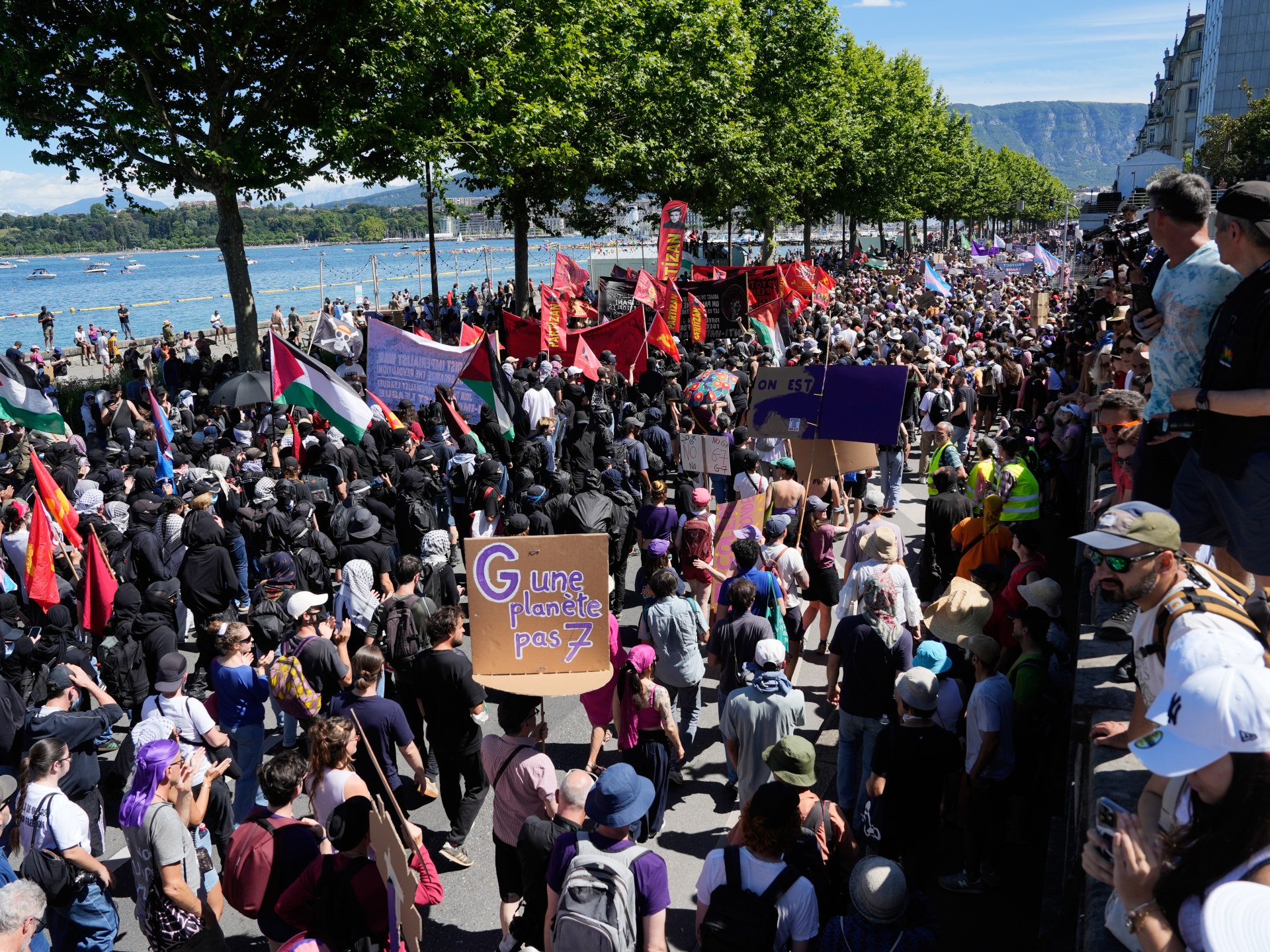

Thousands of protesters have gathered in Geneva ahead of this week’s Group of Seven (G7) summit, which is set to bring together United States President Donald Trump and other world leaders in nearby France.
The demonstration on Sunday was led by the so-called “No-G7” coalition, which is comprised of more than 60 associations and groups, including Palestinian rights advocates, feminist activists and environmentalists.
- list 1 of 3UK eases sanctions on Russian oil imports as fuel prices soar
- list 2 of 3‘Multipolar world’: What Xi and Putin announced after Beijing summit
- list 3 of 3‘A global rupture’: Carney calls for Canada-EU unity before G7 summit
end of list
“We are very afraid of the policy and the politics of Mr Trump and also of the other leaders of the G7, because they are fighting, making war all over the place,” said Francoise Nyffeler, a spokesperson for the coalition.
“The planet is in danger, and we are very scared about it and we want to protest and say that the people of the world are against their policies,” she added.
Swiss and French authorities have deployed thousands of police to provide security for the three-day summit, which begins on Monday in the French resort town of Evian-les-Bains.
Authorities have blocked off roads, banned unauthorised gatherings, and pledged financial support for businesses that could be hit by unrest.

Scores of businesses and shops have boarded up their storefronts with wooden panels as a precaution, leery of upheaval that left a trail of damage in Geneva during a similar summit in Evian in 2003.
Reporting from the protest in Geneva on Sunday, Al Jazeera’s Natacha Butler said demonstrators had denounced the G7 as being “all about the rich getting richer and the poor getting poorer”.
Advertisement
“They say the club of wealthy nations doesn’t represent the global population; that their policies and decisions have a negative impact on the world in terms of climate, equal rights and poverty,” Butler said.
Questions about the legitimacy of the G7 – which includes the US, Canada, Japan, France, Germany, Italy and the United Kingdom – are not new.
The group of countries previously accounted for 70 percent of global gross domestic product (GDP) – a figure that has shrunk to just 40 percent – while representing one-tenth of the global population.
In a sign that global power dynamics are shifting dramatically, other global groups also are growing. The BRICS countries – which include India, Russia and China – have doubled their bloc’s number of members from five to 11.
While G7 summits regularly draw protests, this year’s event also comes amid global frustration with Trump’s leadership on issues as diverse as tariffs, the US-Israeli war on Iran, and the climate crisis.
Demonstrators had been gathering for days in advance of Sunday’s march in Geneva.
A flotilla of around 20 boats appeared on Lake Geneva off the coast of Evian on Saturday, displaying anti-G7 and pro-Palestinian banners. Some 20 protesters were detained on Friday evening, according to Swiss media reports.
Related News
Iran shuts Hormuz strait: But wasn’t it already closed?
At least 49 people die of thirst after truck breakdown in Niger desert
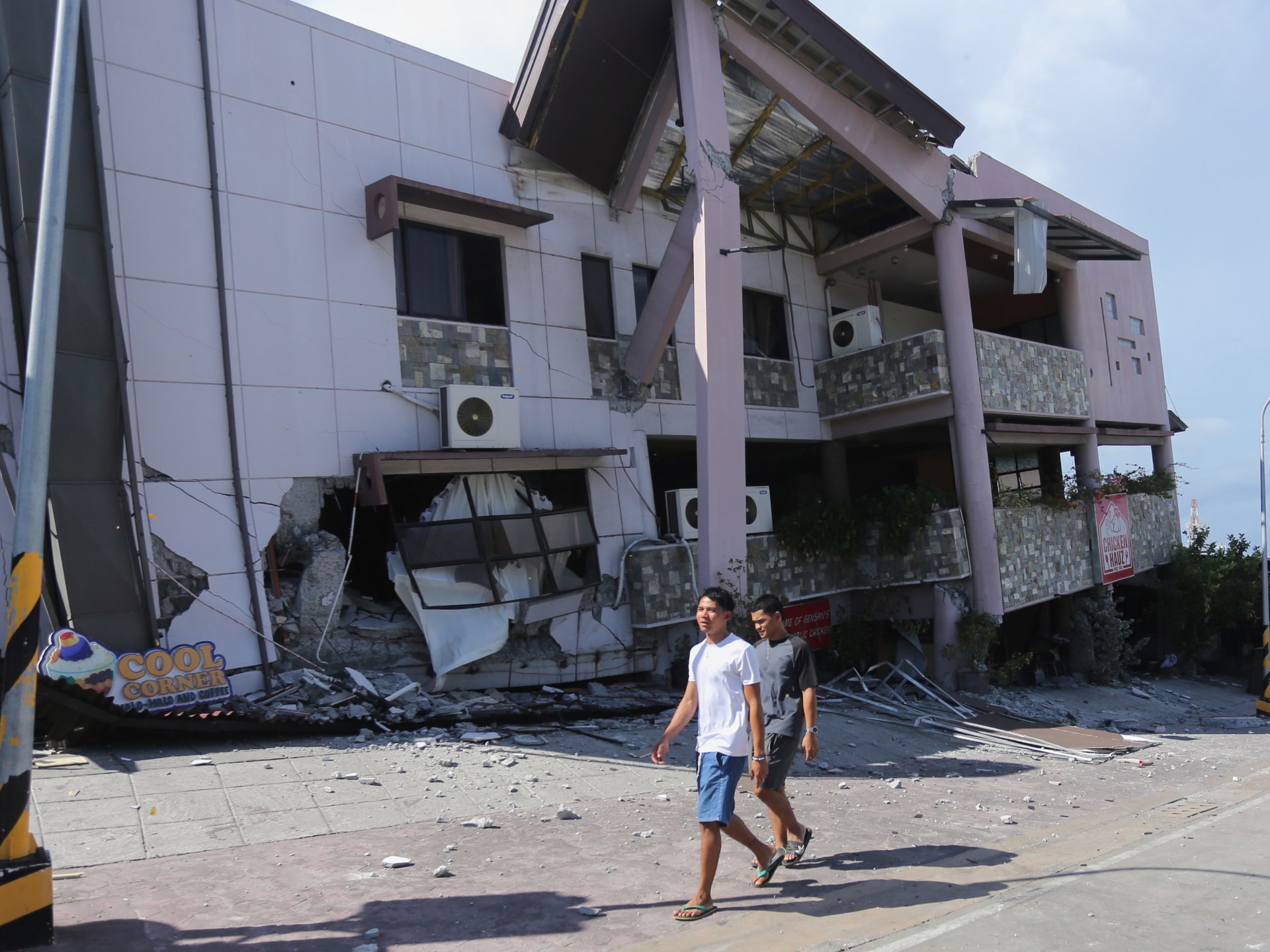
Race to find survivors as Philippines quake toll rises to 37