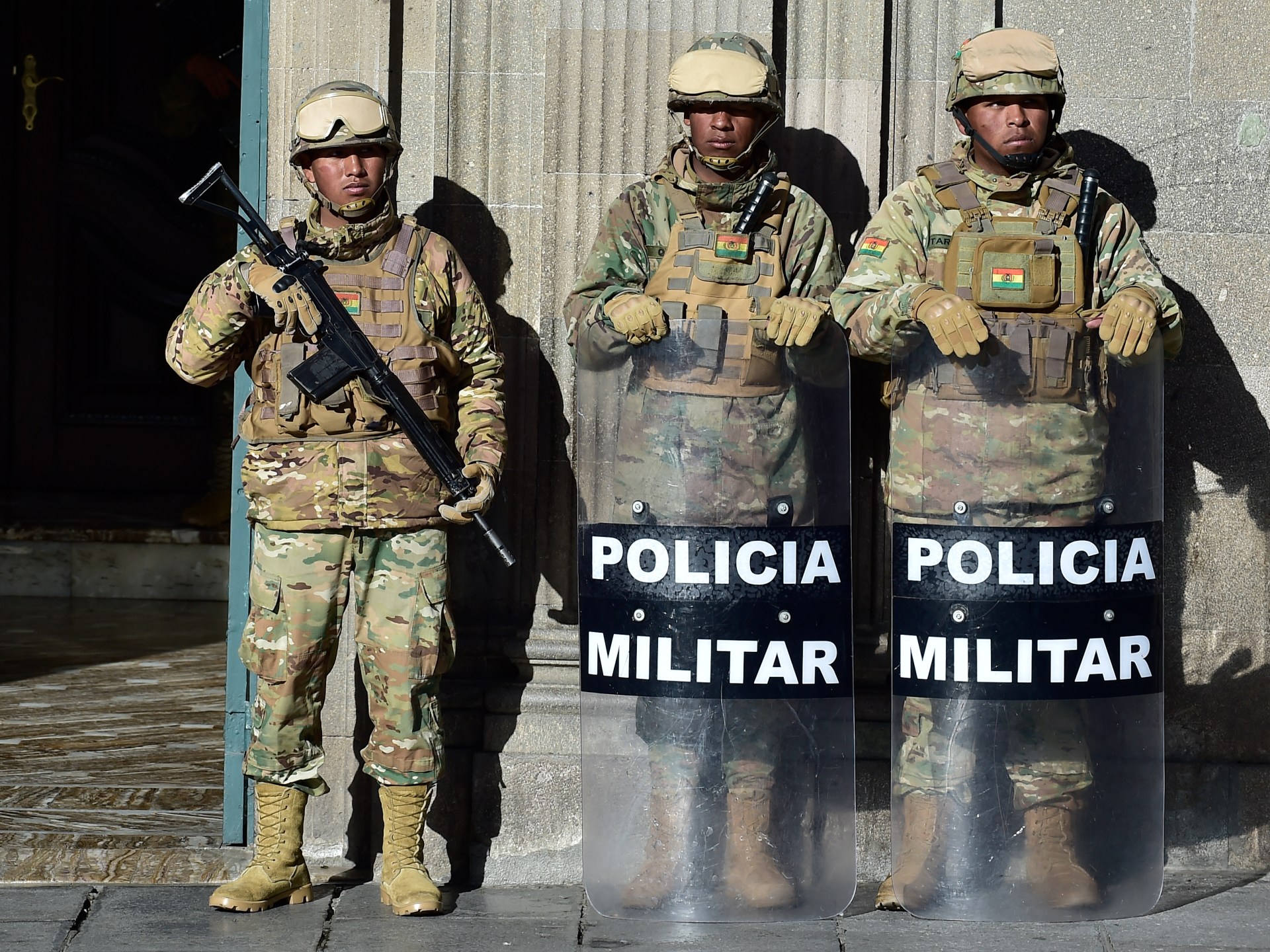

Bolivian President Rodrigo Paz has declared a state of emergency, which gives the military the power to remove blockades that have disrupted food and fuel supplies.
Barricades that have been erected on key roads have effectively isolated the administrative capital, La Paz, after a wave of protests calling for Paz to step down over austerity measures have brought the economy to a halt during the past 50 days.
- list 1 of 3Bolivia’s legislature passes law allowing use of troops against protesters
- list 2 of 3Bolivia approves military measures against nationwide protests
- list 3 of 3Satellite images show 10 places where water is disappearing globally
end of list
Addressing the nation early on Saturday morning, Paz said antigovernment blockades were no longer a social protest but an organised attempt to destabilise Bolivia’s democracy.
“This is not a state of emergency to restrict people’s lives. It is a state of emergency to give people back their freedom,” the president said in a televised address.
He said the state of emergency was to ensure fuel supplies, which have been disrupted by roadblocks that have left tanker trucks stranded.
According to a government statement, the decree will last 90 days but could be lifted earlier if “violence and threats against the population come to an end”.
But more specifically, the decree prohibits “blocking streets, avenues, roads and highways in ways that affect transportation and supplies”.
It also orders the armed forces to temporarily support the police “in restoring order, reopening roads and protecting the population.”
Over the last five weeks, a wave of protests has erupted against Paz’s austerity measures, which included the cancellation of fuel subsidies and other issues.
The protests, however, have led to violent confrontations between demonstrators and riot police, leading to 365 arrests and 37 injuries, according to authorities.
Advertisement
At least 17 people have also died, with most of them linked to a lack of medical care due to transportation disruptions, Bolivia’s ombudsman’s office and human rights organisations have said.
But over the course of the protests, businesses closed, supermarket shelves were emptied, and hospitals ran out of oxygen. Some sectors of society have called on Paz to restore order in the country through force.
On Friday night, Paz signed an agreement with one of the labour unions whose leaders called for the blockades to be lifted. However, some protesters have demanded that Paz resign and refused to negotiate.
When he came into power in November, the president promised to resolve chronic fuel shortages and replenish the central bank’s reserves while protecting social welfare.
However, his austerity measures, most significantly the elimination of longstanding fuel subsidies, have exacerbated inflation. Reforms to encourage foreign investment and stimulate economic growth have also stalled in Congress.
The highland Indigenous and rural workers’ groups have led the protests, accusing his government of neglecting their needs since entering office.
Related News
G7 leaders meet in France with Iran and Ukraine high on agenda

UAE to unlock frozen Iranian funds amid US ceasefire push
Israel kills nine in Gaza as Egypt hosts renewed ceasefire talks