
Ukraine has declared the successful end of an operation in which it recaptured 745 square kilometres (287 square miles) of its territory this year in its southern region of Dnipropetrovsk.
President Volodymyr Zelenskyy announced on Wednesday that the campaign was carried out “exactly as it was determined” and said almost 10,000 Russian soldiers were killed in the process.
- list 1 of 4Ukraine attacks key Russian grain terminal on Black Sea port
- list 2 of 4Is Russia’s economy cracking despite the Iran war windfall?
- list 3 of 4Poland arrests man who allegedly tried to kill Ukrainian American
- list 4 of 4North Korea fumes over upcoming US-South Korea military drills
end of list
The counteroffensive deprived Russia of almost all the territory it had gained in Dnipropetrovsk since entering that region in June 2025, and pushed it back over the regional borders of Donetsk and Zaporizhia.
But this good news for Ukrainians was overshadowed by intensified Russian missile strikes against their cities, which remain increasingly defenceless after the exhaustion of Patriot interceptors.
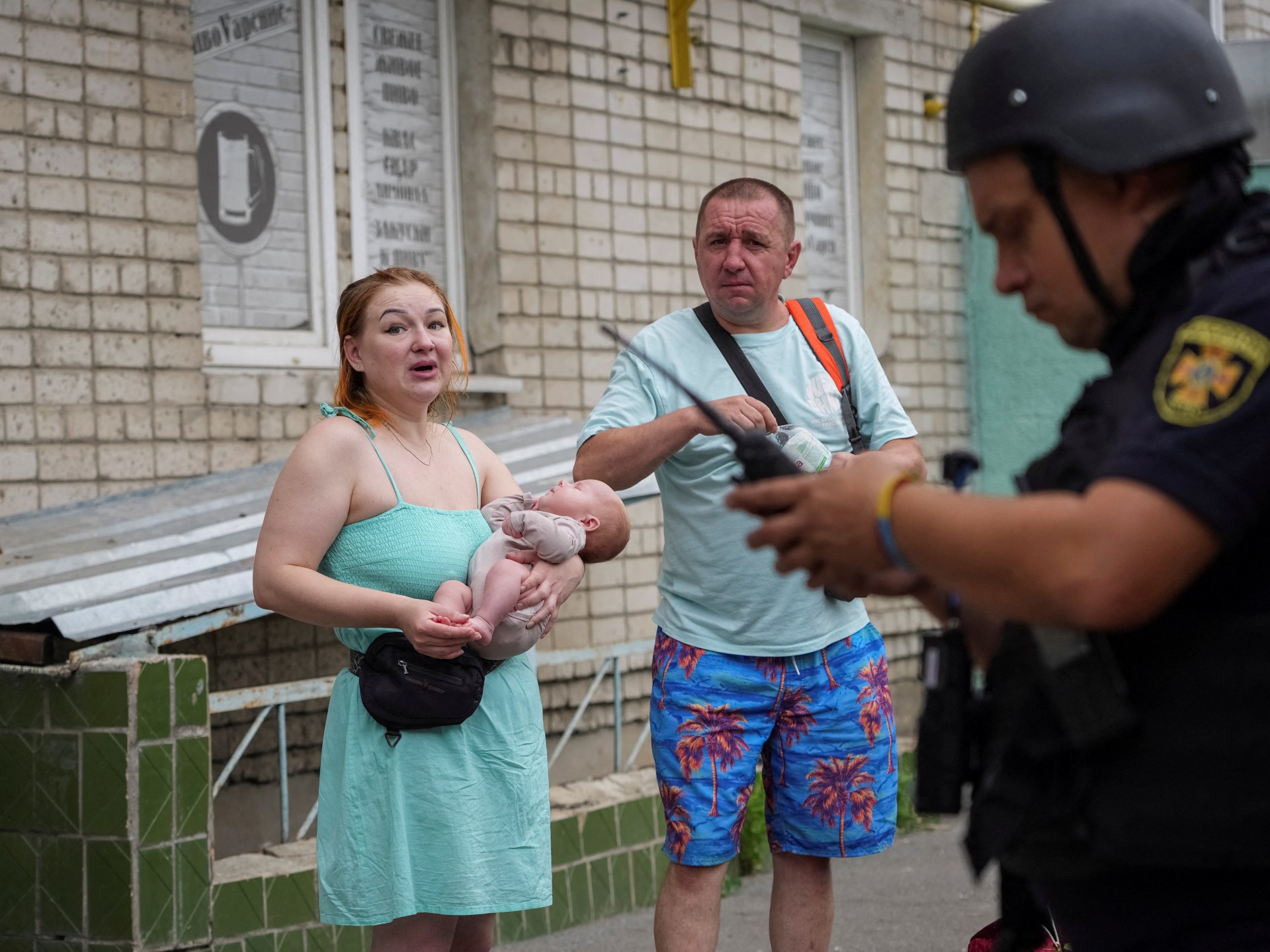
Combined strikes of drones and ballistic or hypersonic missiles hit Kyiv on August 8 and 11, plunged Odesa in darkness on August 9, and struck the city of Zaporizhzhia on August 11, killing at least nine people across all strikes.
Ukraine pushing back on the ground
Zelenskyy said the Dnipropetrovsk operation alone had liberated 26 settlements.
The Institute for the Study of War, a Washington-based think tank that assesses territorial control using geolocated open-source information, conservatively assessed that Ukraine had clawed back at least 627sq km (242 square miles) in the area.

“This operation once again proved that the Ukrainian army is capable not only of steadfastly holding its defences, but also of launching offensives, seizing the initiative, and liberating Ukrainian land,” said former commander-in-chief Oleksandr Syrskii, who planned it.
Advertisement
The ISW assessed that across the front, Russia has suffered a net loss of 233sq km (90 square miles) this year.
This is despite concerted Russian offensives in the eastern Donetsk region, whose capture Russian President Vladimir Putin has repeatedly prioritised.
Russian assaults in June and July have been launched out of Pokrovsk towards Dobropillia, and out of Chasiv Yar towards Kostiantynivka. In both areas, Russia has captured territory and infiltrated large areas beyond it, but this has come at a cost.
Russia suffered a reported 39,000 casualties in June and nearly 43,000 in July – its highest losses since January 2025.

One of the keys to Ukraine’s success on the battlefield has been its scaling up of short-range, first-person view (FPV) drone production, where it now fields 16 drones to every Russian 10. Such drones caused more than 70 percent of Russian casualties in June and July.
Ukraine’s success in disarming Russia of its own FPV drones has also been climbing.
Ukraine downed more than 40,000 Russian drones in July, almost one and a half times as many as it downed in May, Ukraine’s defence ministry said.
Russia goes ballistic
Russia has held command of the air throughout its war in Ukraine, unleashing glide bombs, long-range drones and missiles. It is now pressing that advantage by increasing ballistic and hypersonic missiles, deputy military intelligence chief Vadym Skibitskyi told the news service RBC Ukraine.
Ukraine has only been able to intercept these types of missiles with Patriot systems, but has now run out of interceptors because, said Zelenskyy, it has received almost three times fewer this year from its allies than it did in 2025.
Skibitskyi said Russia has stopped producing missiles Ukraine became adept at shooting down, and diverted components to build greater numbers of Iskander-M ballistic missiles and S-400 hypersonic missiles.
The latter were designed as a surface-to-air missile against enemy aircraft, but have been reprogrammed to follow steep ballistic trajectories and have proven as effective as the Iskanders.
This retooling is yielding results, said Skibitskyi, as Russian industry is beating production targets in most missile categories.
“In April there were 61 ballistic missiles, in May – 107, in June – 134,” he said. “If we talk about ballistic and hypersonic missiles … the enemy launched 198 of them in July. This is the highest figure this year.”
Russia currently produces more than 100 ballistic and hypersonic missiles a month, and may have dipped into stockpiles to launch 56 of these missiles at Ukraine in just the first week of August, but it plans to increase stockpiles for a massive winter campaign against Ukraine’s energy infrastructure, Skibitskyi said.
Advertisement
Last winter, Russia caused up to $70bn of damage to Ukraine’s energy infrastructure, and nearly succeeded in plunging Kyiv into darkness.

Russia may also be planning a massive strike on Kyiv before Ukraine’s Independence Day on August 24, said Ukraine’s Center for Strategic Communications.
Several Ukrainian sources said North Korea was sending a force with up to 120 ballistic missiles to Russia’s western region of Voronezh, adjacent to Ukraine, where barracks were being built for it.
In an interview with Serhiy Sternenko, former defence minister Mykhailo Fedorov said Ukraine’s best response to Russian ballistics was to rush its own successfully tested ballistic missile into production and engage in “counter-ballistic warfare”.
“The Russians must understand that a few minutes after the launch, the entire team that launches the missile must die from our ballistic missile,” Fedorov said.
Skibitskyi also said Russia was prioritising production of its jet-powered Geran 4 and Geran 5 drones, which are harder to intercept than slower-flying, piston-engine drones.
He said Russia was launching its own version of the Starlink satellite network, called Rassvet, ahead of schedule, with 16 satellites now up and a planned increase to 292 in 2027.
Russia suffered a setback when last February, Starlink disabled the terminals it was using to communicate on the battlefield and coordinate accurate counter-battery fire.
Ukraine’s long reach
Ukraine has destroyed almost a third of Russia’s refining capacity this year with its long-range drones. During the past week it struck four refineries, including Gazprom’s Neftekhim Salavat refinery in the Republic of Bashkortostan, 1,300km (810 miles) from Ukraine.
Ukraine has also pursued medium-range strikes on Russian military logistics and Russian oil tankers, starving the front line of weapons and fuel. During the past week, it brought to 218 the number of ships it has sunk or disabled, and destroyed six air defence systems.
Its most spectacular hit was on the Russian main Black Sea port of Novorossiysk on August 12, where it struck two frigates, a missile ship, a landing ship and a patrol ship. It also hit Russia’s Sheshkharis oil offloading terminal, part of a campaign to starve Russia of fossil fuel export revenue.
Zelenskyy called the operation “unique” because it was the first time Ukraine had coordinated 14 types of domestically built aerial and surface drones simultaneously.

Related News
Wildfires still burning in France and Spain amid fears of more to come
EU sanctions nine people over alleged Russian cyber-spying campaign
New front in US-Iran war escalates as Houthis fire at Saudi oil facilities