
Eritrea has asked the United Nations to take “deterrent measures” after what it called Ethiopia’s “declaration of war” in the conflict over the Tigray region.
Eritrea’s request comes a day after Addis Ababa, in a letter to the Security Council, accused Asmara of launching an “all-out invasion”, saying Eritrean troops had advanced up to 60 kilometres (37 miles) into Ethiopia’s Tigray.
- list 1 of 4Ethiopia and Eritrea accuse one another of launching war
- list 2 of 4Will Ethiopia’s neighbours intervene as Tigray war escalates?
- list 3 of 4Witnesses spot Eritrean troops inside northern Ethiopia as tensions flare
- list 4 of 4Ethiopian PM Abiy demands Red Sea access as tensions with neighbours rise
end of list
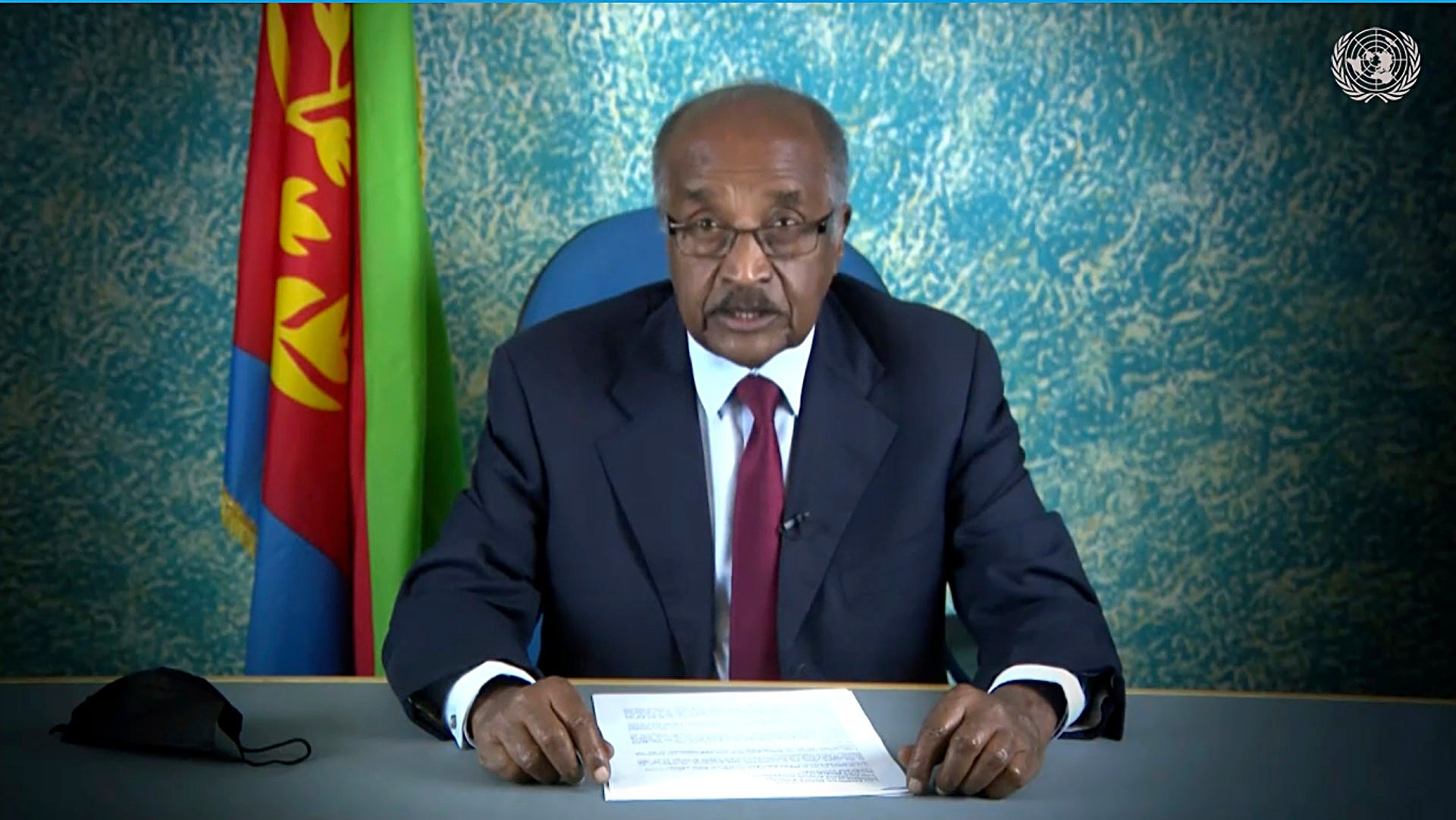
In a separate letter to the council on Saturday, Eritrean Foreign Minister Osman Saleh said the claims of an Eritrean incursion were part of an Ethiopian plan to justify a war of aggression and urged the UN to intervene, invoking Chapter VII of the UN Charter, which allows measures from sanctions to military action.
The neighbouring countries have accused each other of starting a war over Tigray, where Ethiopia says Eritrea is backing rebels.
An alliance of seven armed groups launched attacks against federal Ethiopian forces in the northern region last month, as they attempt to overthrow Prime Minister Abiy Ahmed’s government.
Eritrean forces have since reportedly intruded into Ethiopian territory, with Addis Ababa accusing Asmara of backing the rebel Tigray People’s Liberation Front (TPLF).
The Ethiopian army pushed TPLF rebels back this week and seized the region’s capital, Mekelle. It also said it launched drone strikes against Eritrean troops in the region.
“Eritrea requests the UN Security Council to forcefully condemn Ethiopia’s deplorable declaration of war against Eritrea … and take the requisite deterrent measures,” Eritrea’s Saleh said in the letter on Saturday.
Advertisement
He said Ethiopia’s action would cause “huge devastation to the peoples of both countries and destabilise the whole region”.
Ethiopian Foreign Minister Gedion Timothewos on Friday accused Eritrea of “a blatant act of aggression that engages Ethiopia’s inherent right to self-defence”.
Timothewos invoked Ethiopia’s right to self-defence under Article 51 of the UN Charter, but he did not specify what measures the country was taking.
Faisal Roble, a Horn of Africa specialist, believes both sides are “preparing for the last phase of an open conflict”.
“There is really no doubt that both of them are inching towards an open conflict,” he told Al Jazeera from the Kenyan capital, Nairobi.
“Whatever they write to the United Nations, it is just posturing and making sure that they have some sort of international support on their side,” the analyst added.
In his letter, Saleh called Ethiopia’s actions “deceitful attempts to rationalise its brazen acts of war”, claiming that they were “hollow in substance”.
Eritrean Information Minister Yemane Gebremeskel accused Ethiopia on Friday of pursuing aggression against Eritrea through its demands for sovereign access to the Red Sea. Writing on X, he did not explicitly confirm or deny the reported troop crossings.
Ethiopian Prime Minister Abiy reiterated on Monday that Ethiopia must have access to the Red Sea.
Eritrea gained independence from Ethiopia in 1993, and they fought a deadly border war from 1998 to 2000.
Relations improved after Abiy came to power in 2018, but have soured again in recent years.
Landlocked Ethiopia has repeatedly insisted that it has a right to direct sea access, which Eritrea interprets as a threat to invade and seize its port at Assab.
TPLF fighters battled Ethiopian government forces, then backed by Eritrea, in a devastating 2020-2022 war.
Related News

Israeli film on Gaza receives 25-minute ovation at Venice premiere
NYC police arrest Susan Sarandon, other celebrities protesting Netanyahu
Ethiopian armed groups forge alliance against government