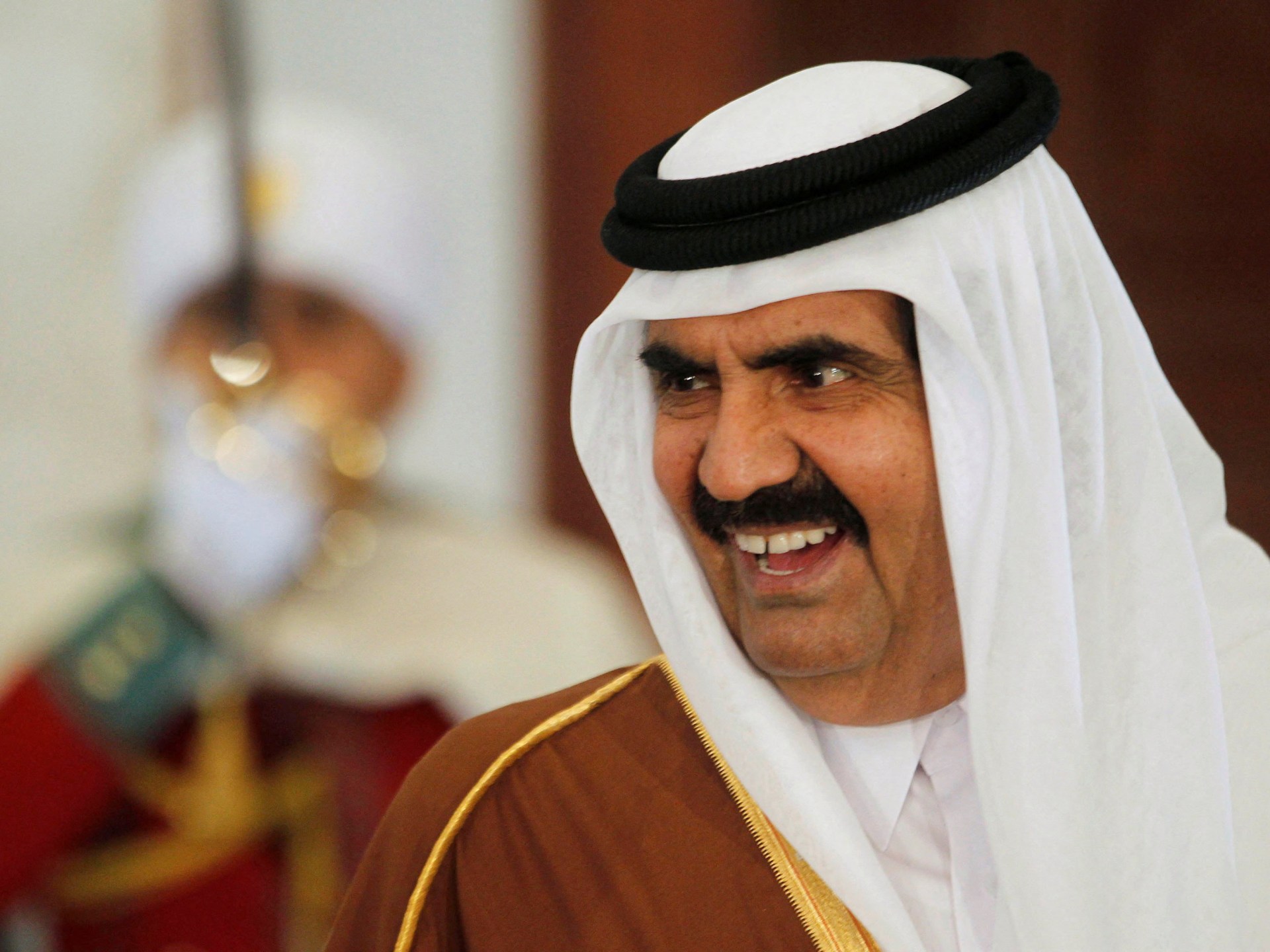

From a tiny state struggling to survive to a country punching above its weight with soft power, wealth and influence felt in the region and beyond, Qatar and its success story were propelled by late Father Emir Sheikh Hamad bin Khalifa Al Thani.
Sheikh Hamad, who died on Sunday aged 74, was able to redefine Qatar’s position on the political map of the Middle East, moving it from the margins of the Gulf to regional prominence in the political, diplomatic, national and humanitarian fields, relying on his vision that transcended the country’s modest size and narrow borders.
- list 1 of 3Former Emir of Qatar Sheikh Hamad bin Khalifa Al Thani dies aged 74
- list 2 of 3Sheikh Hamad bin Khalifa Al Thani, the architect of modern Qatar
- list 3 of 3Key moments from former Qatar Emir Sheikh Hamad bin Khalifa Al Thani’s life
end of list
Those who knew Sheikh Hamad said he was aware, even before assuming power in 1995, of his country’s lack of traditional elements of strength and understood the need to invest in soft power.
From the early days of his reign, he implemented enormous projects in education, health, scientific research and sports in addition to the vital energy sector, transforming his country’s wealth into international diplomatic weight and not merely a source of prosperity for his own people. The former emir also understood the power of media when he created Al Jazeera, one of the most successful news channels in the Arab world, which later transformed into a powerful media network.
Qatari diplomacy led fruitful mediations in complex disputes and conflicts across a vast geographic expanse from the Eastern Mediterranean to the Horn of Africa.
Doha brought together leaders in Lebanon in 2008, concluding a historic agreement that quelled the risk of another civil war. Qatar sponsored negotiations that lasted 30 months between the Sudanese parties over the Darfur crisis, culminating in 2011 in the signing of the Doha Document for Peace.
Advertisement
Qatar continued to sponsor dialogue between Hamas and Fatah, the two sides in the Palestinian divide, and settled disputes in Yemen and Somalia and between Eritrea and Djibouti in a rare diplomatic model.
During the Father Emir‘s era, Qatar established the Al Udeid military base, which hosts the largest United States military force in the Middle East. Not far from it, Doha hosted the leadership of Hamas, a stance that prompted some residents to describe Sheikh Hamad as the “emir of the resistance” when he visited southern Lebanon in 2010 to inspect villages that had been rebuilt with Qatari funding after the 2006 Israeli-Hezbollah war.
He was the first Arab leader to visit the Gaza Strip in the aftermath of the Israeli war in 2012, announcing from there the launch of housing and reconstruction projects with a grant worth $400m.

Qatar’s mediation role remained shielded from affecting its political principles, especially the Palestinian cause, considering it had to maintain open communication channels with all parties to the conflicts, including Israel.
The Gulf state supported the “Arab Spring” revolutions, and it adopted policies that explicitly backed the right of the region’s peoples to freedom and dignified lives.
The Qatari project during the father emir’s era was not focused solely on economic modernisation but also built an independent political identity capable of regional and international influence.
Sheikh Hamad left his post in 2013 after his vision for Qatar became a reality, and during the era of his son and successor, Emir Sheikh Tamim bin Hamad Al Thani, he witnessed Qatar’s transformation into an energy and mediation power.
Related News

‘He had a lot of profiles’: The rise of online drug-facilitated rape gangs
Aid workers faced record number of attacks in 2025, UN says

Top IRS lawyer to resign post amid disagreements with Trump administration