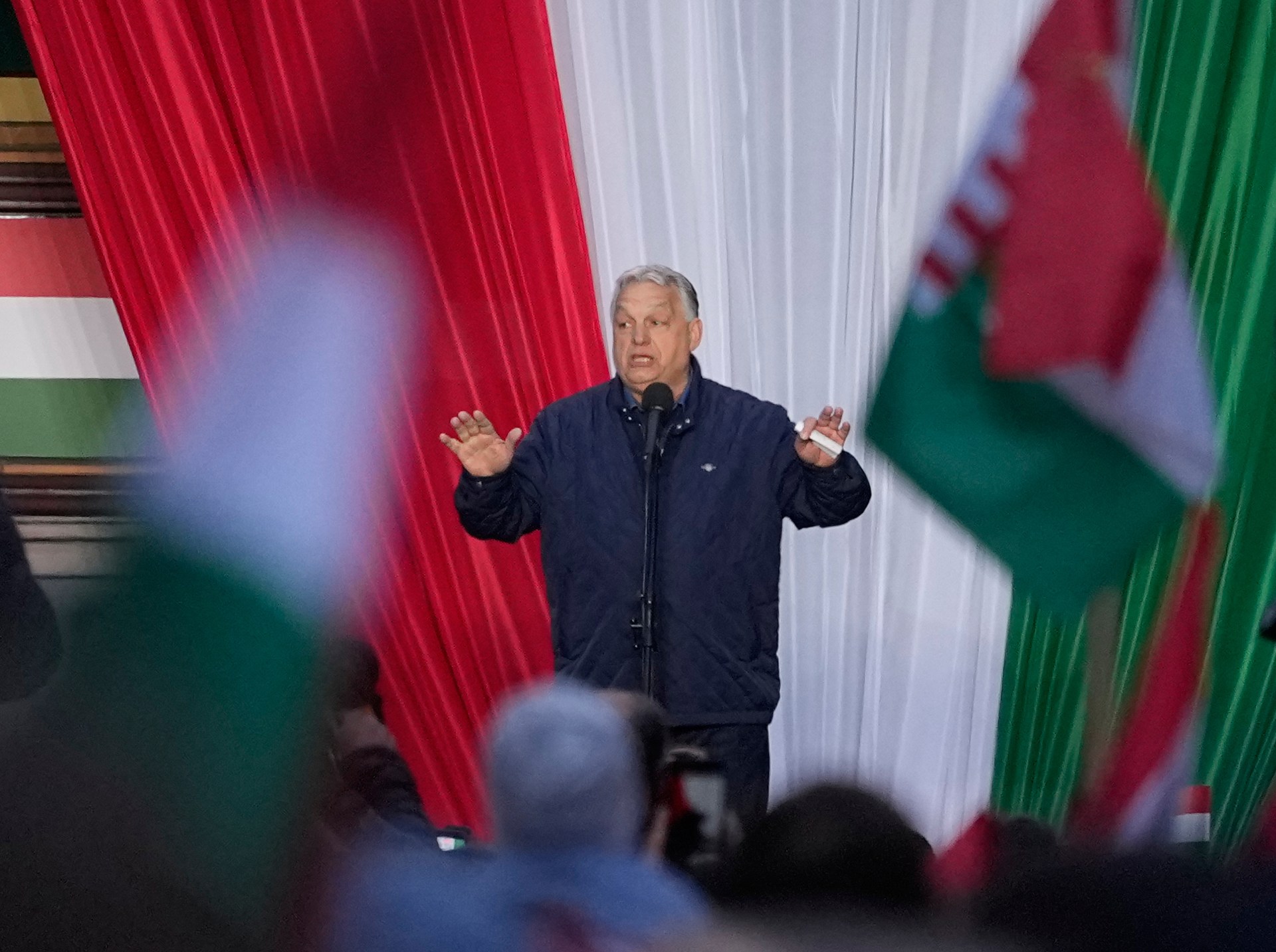

For the first time in 16 years, Viktor Orban’s rule over Hungary is looking shaky.
In Sunday’s closely contested parliamentary election, around eight million voters in the population of almost 10 million are ready to choose between stability or change.
- list 1 of 3‘Orban constantly vetoes’: Europe braces for Hungary election
- list 2 of 3Vance visits Hungary to shore up Orban’s support before Sunday vote
- list 3 of 3Why is Hungary’s election so important on the international stage?
end of list
It’s clear there is a large appetite for someone new looking at the crowds of supporters that Peter Magyar, Orban’s centre-right, pro-European Union contender has been attracting. The latest polls show his Tisza party comfortably ahead of Orban’s Fidesz, with a big chance of winning a majority in parliament.
A visit by US vice president JD Vance to Budapest this week, along with an endorsement by President Donald Trump, did not turn the tide in Orban’s favour. Instead, due to public frustration over the Iran war and the resulting price rises, the White House show of support may even have cost him votes.
Vance’s visit shows that this election is being closely watched in Washington, where Orban’s conservative, illiberal rule is seen as a model. But it’s also attracted attention in Moscow, where Orban is considered an ally who, much to the annoyance of the EU, has regularly used his veto to block funds for the war in Ukraine.
Addressing a crowd in Szekesfehervar, one of his loyal bases, Orban called on his supporters to continue campaigning until the last moment. “It’s a choice between me or Zelenskyy,” he said on Friday evening.
But Orban’s campaign rhetoric that Hungary will be dragged into the Ukraine war – and that Ukraine’s President Volodymyr Zelenskyy will be the one in charge – has started to sound hollow to long-time Fidesz supporters, such as Marta Bognar.
After voting for Orban for years, she is now campaigning for his opponent in her hometown Sumeg, one of the many traditional strongholds of Fidesz. She tells Al Jazeera she is struggling to get by – or buy her medication due to the ailing healthcare system.
Advertisement
“We need change. If there is no change, I believe there could even be a civil war,” Bognar says.
“I am so angry with this government. We don’t need to align ourselves with Russia or America, we belong in the European Union.”
Her friend Eva Katona-Kovacs mentions widespread corruption as the main reason supporters are abandoning Orban.
“He has built a feudal system with mini-kings that has destroyed our country and the future of our youth,” she says.
Sumeg is one of the many small towns Magyar has visited during his campaign. The 45-year-old trained lawyer, once a loyal supporter and admirer of Orban, rose to fame in 2024 during large protests over a scandal involving the country’s justice system and a controversial presidential pardon in a child abuse case.

Magyar supports Orban’s anti-immigration drive but promises to restore ties with the EU and return the frozen $18 billion Brussels feared could be misused because of a lack of rule of law and erosion of democratic institutions.
“Hungarians are freezing in their beds,” Magyar shouts from a small stage in the town square. “In a few days it will all be over for this corrupt, mafia government.”
But the outcome on Sunday is hard to predict due to Hungary’s complicated electoral system and the changes Orban made to the boundaries of the 106 constituencies.
In 2024, districts in the opposition stronghold of Budapest were reduced from 18 to 16 districts. Of the 199 seats in parliament, 106 are determined by the constituencies and 93 come from party results, which could well favour the ruling party.
On voting day hundreds of volunteers will be stationed at polling stations around the country to report any election fraud.
Orban’s supporters at a rally in Tapolca, two hours west of Budapest, are convinced he will win.
“For me and my partner, Orban is a safe choice,” Florian Fustos says. “He supports young families to have children which is important in an ageing society. I don’t believe he can lose, the race is not as tight as the opposition says.”
By Sunday midnight, Hungarians should have a good idea whether the country will be changing its course or not.
Related News
First troops from UN-backed Gang Suppression Force arrive in Haiti

US says Trump ‘interested’ in asking Arab countries to pay for war on Iran
‘Closer to a break than ever’: Can NATO survive if Trump pulls the US out?