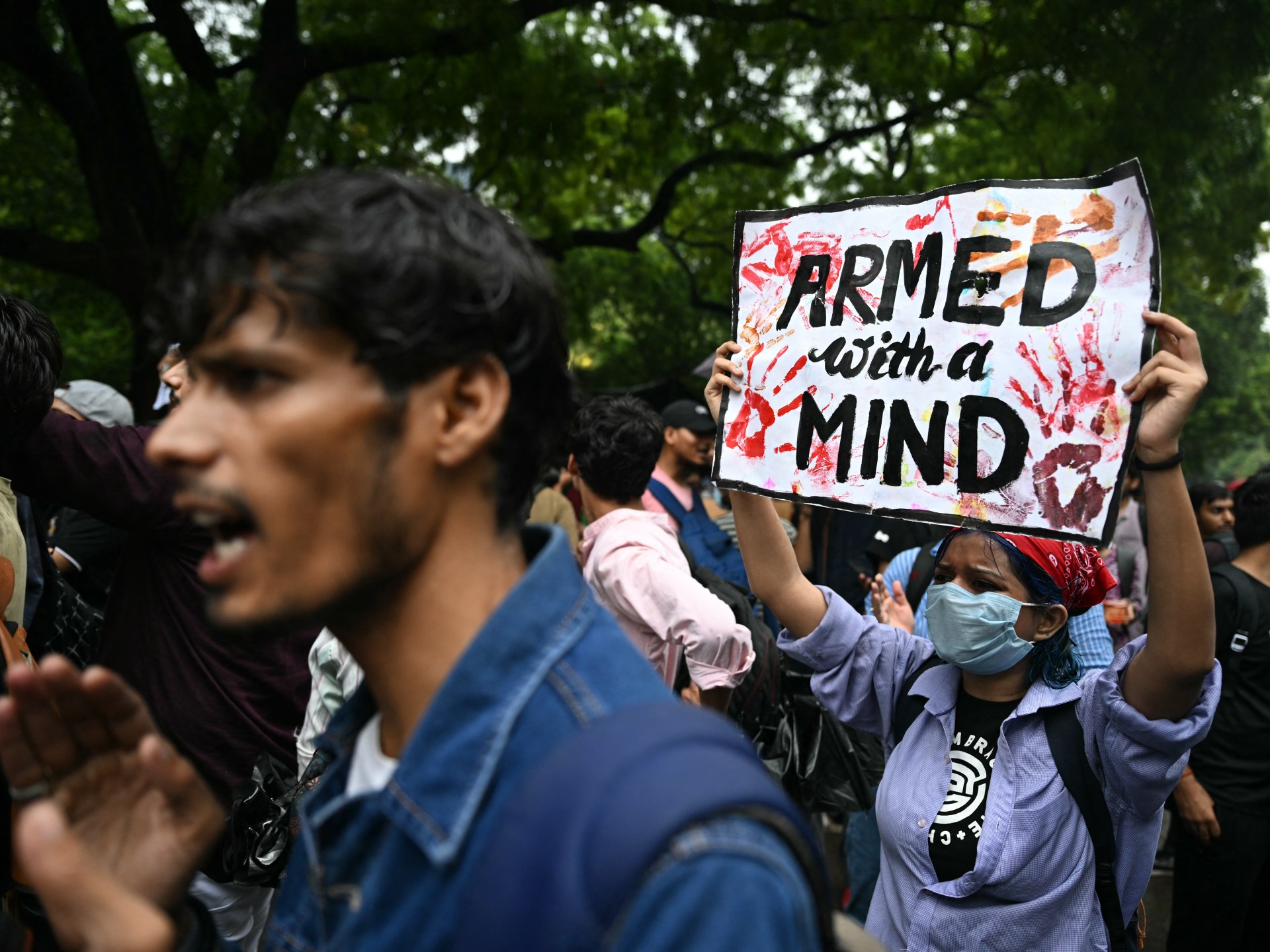

Indian opposition leader Rahul Gandhi has been released after he was detained during growing protests over the education system.
The protests, which have been led predominantly by students and a social media-driven movement, the Cockroach Janta Party (CJP), have emerged as one of the biggest challenges to Prime Minister Narendra Modi’s government.
- list 1 of 3Why have India’s Gen Z protesters called for a march to parliament?
- list 2 of 3India’s cockroach politics is no joke
- list 3 of 3Indian activist Wangchuk urged to end hunger strike over exam paper leaks
end of list
Protesters have called for the resignation of Modi and Education Minister Dharmendra Pradhan after a leak of medical school test papers forced more than two million medical students to retake their exams and was linked to at least 12 student suicides.
Gandhi and other opposition leaders were detained on Tuesday during a sit-in outside Modi’s residence in New Delhi while accusing the government of ignoring student demands.
They also protested against the aggressive response to the student protests, which are demanding educational reform and greater government accountability. Gandhi was released late on Tuesday.

In his first comments since protesters marched on parliament on Monday, Pradhan condemned Gandhi’s sit-in in a post on X on Tuesday night, saying he continues “to shamelessly exploit students as political tools to manufacture disruption”.
“The students of India deserve far better than being treated as props in a political campaign. They deserve certainty over chaos, solutions over slogans, and responsibility over disruption,” he wrote.
Advertisement
“We owe our students more than outrage. We owe them answers, reforms, and accountability. That is exactly what our government remains committed to delivering,” Pradhan added.
The CJP has attracted millions of followers on social media since it launched two months ago. Its popularity reflects growing frustrations among young Indians over issues such as job shortages and exam leaks, which they say occur frequently.
On Monday, police in New Delhi confronted protesters as they marched towards parliament, using tear gas and batons to push them back.
According to police, 118 police personnel were hurt and another 60 people were injured.
Protests were also held in Mumbai and Bengaluru, drawing hundreds of people.
On Wednesday, hundreds of people remained camped at New Delhi’s Jantar Mantar protest site as the CJP promised to continue its campaign.
The movement gained momentum from the support of activist Sonam Wangchuk, who began a hunger strike on June 28 but was forcibly moved to a hospital by police on Saturday.
On Tuesday, he was moved to a private hospital by court order after a petition from his wife alleged he had been illegally detained.
Related News

Photos: Rising energy prices disrupt education on Cambodia’s Tonle Sap lake
Hichilema re-elected as Zambia president amid opposition concerns over vote
Kazakhstan’s Tokayev appoints longtime adviser as vice president