
PM Ali al-Zaidi also orders his government to seize all crossings in the Kurdish region after an oil smuggling inquiry.
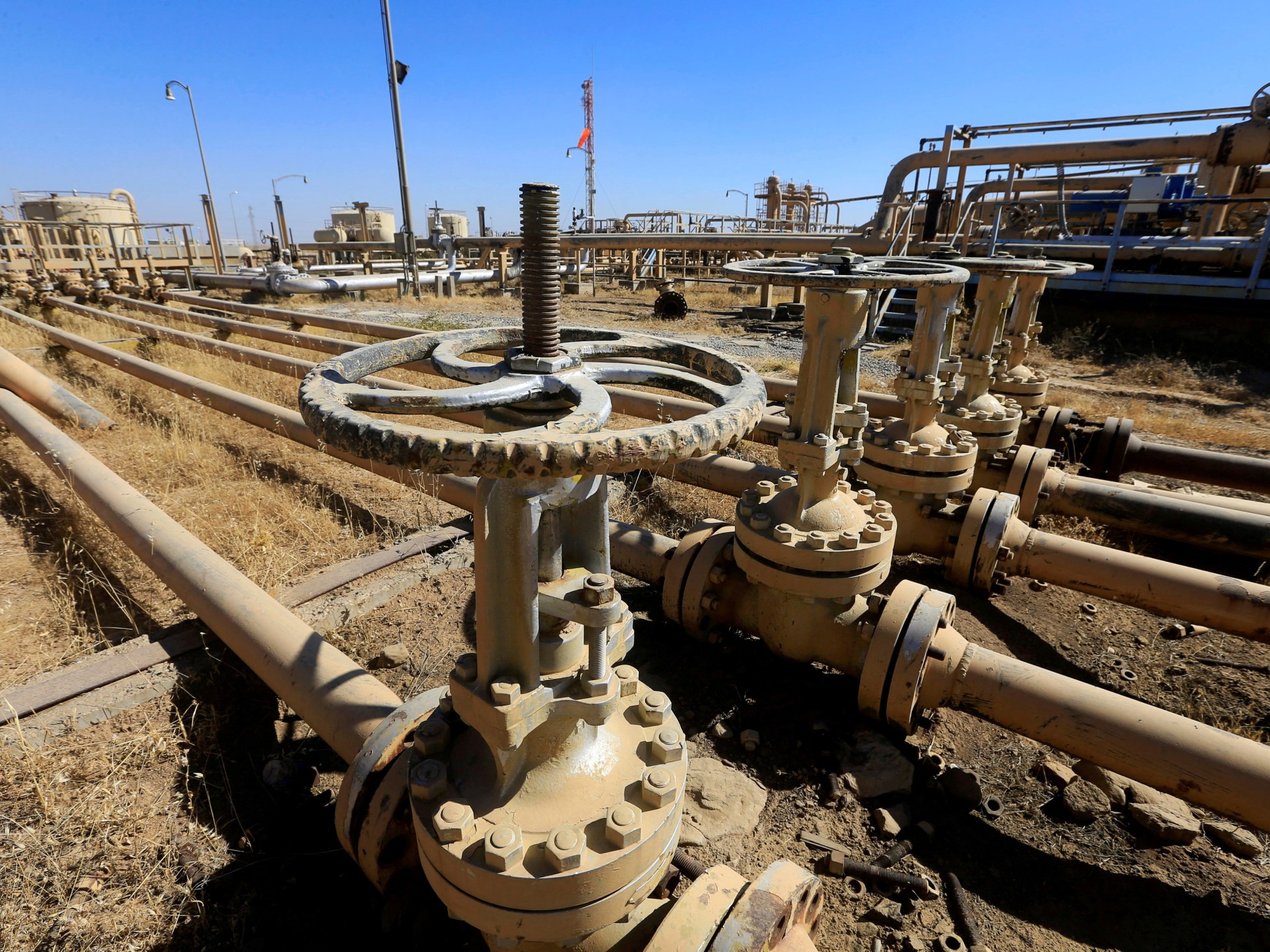
Iraq’s Prime Minister Ali al-Zaidi has ordered the federal Ministry of Oil to manage oilfields in areas under Kurdish security control, potentially deepening tensions between Baghdad and the semi-autonomous region in the north of the country.
The prime minister’s order covers oilfields in Diyala, Kirkuk, Salahuddin and Nineveh provinces, according to a statement from his office on Tuesday.
- list 1 of 4What is Iraq’s Jurf al-Sakhar and what is behind gov’t push to control it?
- list 2 of 4What next for Iraq’s push against militias following Jurf al-Sakhar deal?
- list 3 of 4Iraq reaches compromise with Kataib Hezbollah over armed group’s stronghold
- list 4 of 4Iraqi forces deploy to Jurf al-Sakhar after deal with Iran-backed group
end of list
It said Baghdad would “secure and monitor all oilfields with cameras, including fields within the administrative boundaries of the federal government that are under the security authority of the regional government”.
Al-Zaidi also ordered the border crossings authority to take over all crossings in the Kurdish region and directed the regional government to approve exports of crude oil and petroleum products only through the federal Oil Ministry.
“The Border Forces Command shall close unofficial crossings along the international borders with neighbouring countries, including crossings in the Kurdistan Region of Iraq,” the statement said, adding that “all seasonal roads” between the four governorates and the Kurdish region would be closed.
Al Jazeera’s Mahmoud Abdelwahed, reporting from Baghdad, said the latest development might exacerbate tensions and disputes over control of oil and the sharing of budgetary resources between the national government and the autonomous regional government.
“The federal government is keen to keep all excavation and marketing of oil under its state organisation, SOMO, but this has been totally rejected by the Kurdish region,” he said.
Advertisement
A dispute over Kurdish authorities selling oil without Baghdad’s approval halted pipeline shipments to Turkiye for more than two years before the sides agreed in September 2025 to restart them.
Al-Zaidi, meanwhile, removed the head of the border crossings authority and suspended North Oil Company’s director general and his deputies pending further investigation, Iraq’s state news agency reported.
In a separate case, Iraqi officials accused Kataib Hezbollah, an armed group backed by Iran, of running an oil smuggling network in its stronghold of Jurf al-Sakhar, south of Baghdad.
The group denied the accusation.
Related News
Paraguay raids ex-president’s home: Why a bank crash brought down Pena
Iran denies talks with US, says Hormuz will stay shut until demands are met
Bomb threats disrupt flights across Europe, no explosive devices found