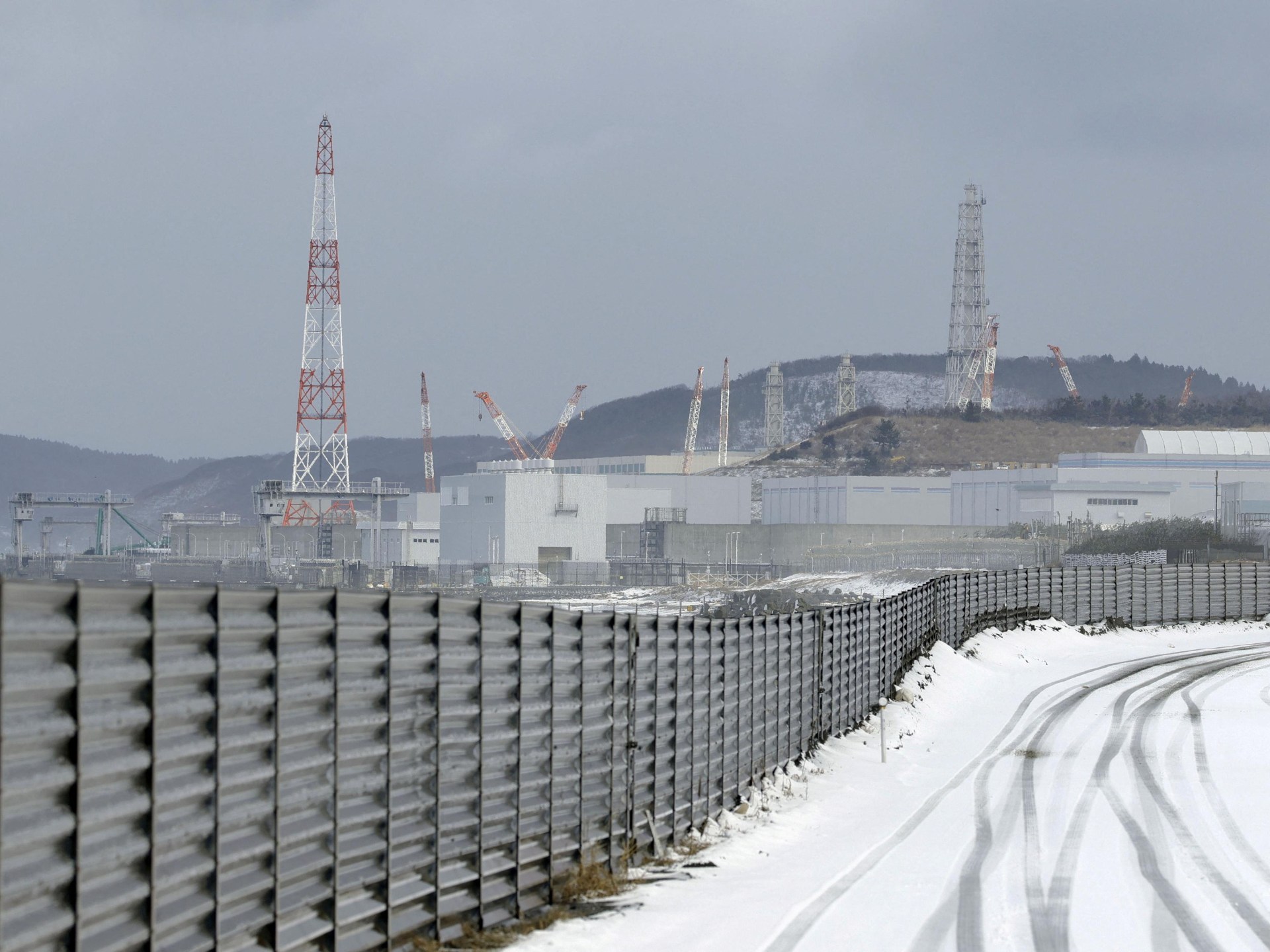

The restart of a reactor at the world’s largest nuclear power plant has been suspended in Japan, a day after the process began, its operator, which also manages the wrecked Fukushima plant, said. But the reactor remains “stable”.
The No 6 reactor at the Kashiwazaki-Kariwa plant in north-central Japan – closed since the 2011 Fukushima disaster – reactivated on Wednesday as plant workers started removing neutron-absorbing control rods from the core to start stable nuclear fission.
- list 1 of 3Japan to restart world’s biggest nuclear plant after 15-year shutdown
- list 2 of 3Japan gov’t greenlights record $58bn defence budget amid regional tension
- list 3 of 3Japan, Philippines sign new defence pacts amid surging China tensions
end of list
But the process had to be suspended hours later due to a malfunction related to control rods, which are essential to safely starting up and shutting down reactors, the Tokyo Electric Power Company Holdings (TEPCO) said. The duration of the shutdown was still unknown.
TEPCO said there was no safety issue from the glitch and it was checking the situation while suspending the restart operation. The utility later said it was putting the reactor back into shutdown for a fuller examination.
“We were investigating the malfunctioning electrical equipment,” spokesperson Takashi Kobayashi told the AFP news agency.
The reactor “is stable and there is no radioactive impact outside”, he said.
Control rods are a device used to control the nuclear chain reaction in the reactor core, which can be accelerated by slightly withdrawing them, or slowed down or stopped completely by inserting them deeper.
The restart, initially scheduled for Tuesday, had been pushed back after another technical issue related to the rods’ removal was detected last weekend – a problem that was resolved on Sunday, according to TEPCO.
Kashiwazaki-Kariwa is the world’s biggest nuclear power plant by potential capacity, although just one reactor of seven was restarted.
Advertisement
The facility was taken offline when Japan pulled the plug on nuclear power after a colossal earthquake and tsunami sent three reactors at the Fukushima atomic plant into meltdown in 2011.
However, resource-poor Japan now wants to revive atomic energy to reduce its reliance on fossil fuels, achieve carbon neutrality by 2050 and meet growing energy needs from artificial intelligence.
Fourteen other nuclear reactors have restarted across Japan since 2011, but the Kashiwazaki-Kariwa plant, about 220 kilometres (135 miles) northwest of Tokyo, is the first TEPCO-run unit to resume production.
The company also operates the stricken Fukushima Daiichi plant, now being decommissioned.
A restart of the No 6 reactor could generate an additional 1.35 million kilowatts of electricity, enough to power more than 1 million households in the capital region.
Public opinion in Niigata is deeply divided: about 60 percent of residents oppose the restart, while 37 percent support it, according to a survey conducted in September.
“It’s Tokyo’s electricity that is produced in Kashiwazaki, so why should the people here be put at risk? That makes no sense,” Yumiko Abe, a 73-year-old resident, told AFP this week during a protest in front of the plant.
Earlier this month, seven groups opposing the restart submitted a petition signed by nearly 40,000 people to TEPCO and Japan’s Nuclear Regulation Authority, saying that the plant sits on an active seismic fault zone and noting it was struck by a strong quake in 2007.
Related News

Uganda’s President Yoweri Museveni wins seventh term: Electoral Commission
Extreme cold kills another infant in Gaza as Israel blocks vital aid
Minneapolis leaders urge transparency, independent probe after ICE killing