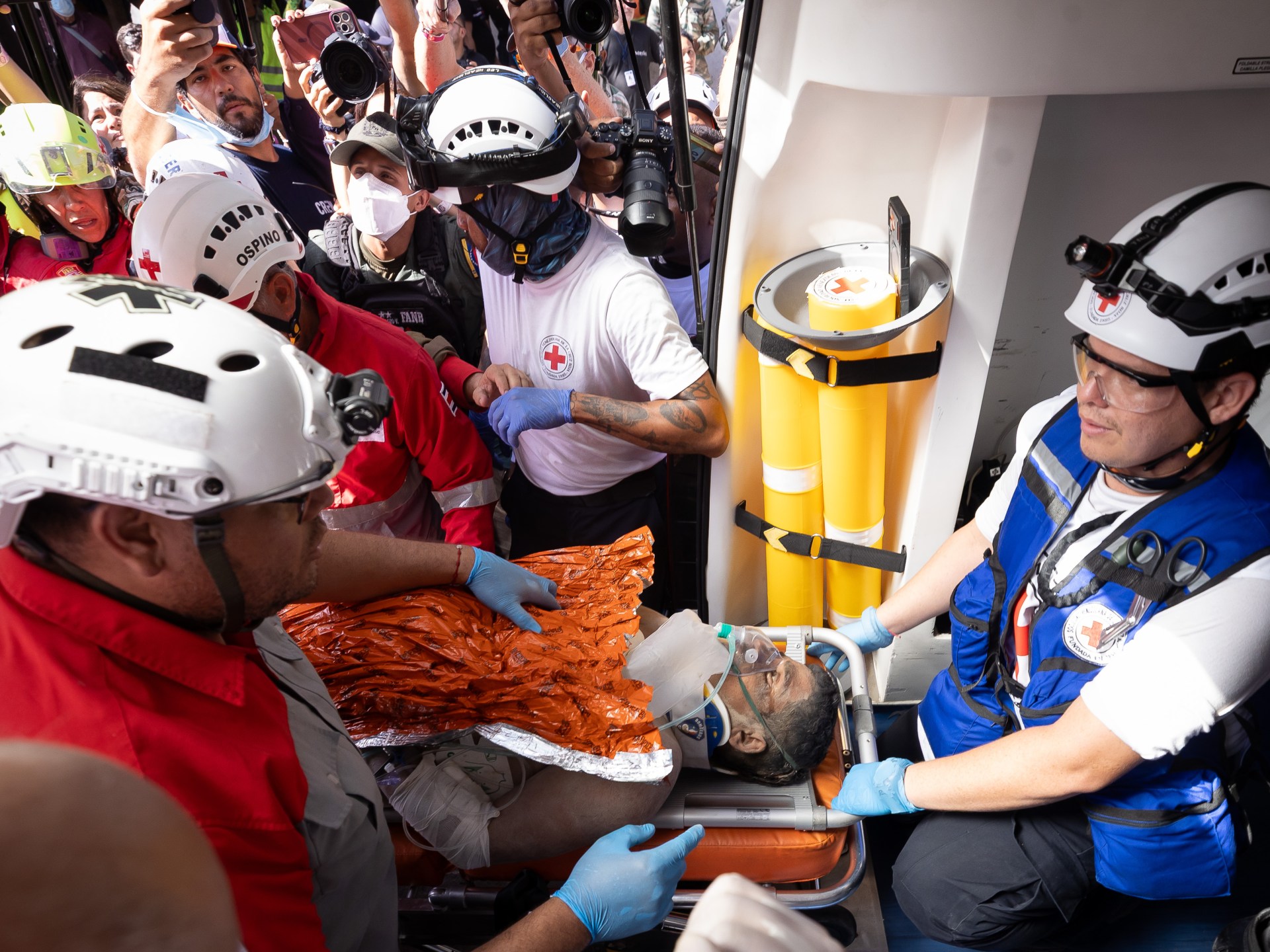

A man has been rescued from a collapsed building eight days after twin earthquakes devastated Venezuela.
The rescue on Thursday came as attention has begun to shift from finding survivors under the rubble to addressing the humanitarian needs of the thousands of residents displaced.
- list 1 of 3Venezuela earthquakes death toll surpasses 1,700 as rescue hopes fade
- list 2 of 3Rescuers find more bodies under rubble as Venezuela death toll rises
- list 3 of 3As Venezuela responds to earthquake devastation, volunteers take charge
end of list
An estimated 60,000 buildings were damaged or destroyed in last week’s earthquakes, which hit magnitudes of 7.2 and 7.5, respectively. An estimated 13,000 people have been left homeless.
In its last official update, Venezuela’s government said that at least 2,295 people have been confirmed killed, with 11,000 injured. The death toll was expected to rise, with about 50,000 people reported missing.
But in a rare ray of hope, rescue workers were able to reach 43-year-old security guard Hernan Gil on Thursday, after days of trying to retrieve him from a collapsed seven-storey building where he worked in the hard-hit coastal area of Catia La Mar.
Gil had been located three days earlier. Rescue teams from seven countries, including Venezuela, Chile, the United States, Portugal, Costa Rica, El Salvador and Mexico, worked to free him.
“This is truly a miracle,” Gil’s wife, Gusbimar Gonzalez, told the news agency AFP.
Cristian Vera, the leader of the Chilean rescue team, told AFP that rescuers eventually were able to dig a three-metre (9.8-foot) tunnel to extract Gil. They had been able to provide him water via a hose and oxygen tube in recent days.
“It wasn’t easy to reach the exact spot where the victim was located,” he said.
Reporting from the state of La Guaira, Al Jazeera correspondent Zein Basravi said that, while Gil’s recovery has given some families hope, countless rescue attempts across the country have ended in tragedy.
Advertisement
Many of the collapsed buildings in La Guaira, located north of Caracas, have already been marked with the letter D for “deceased”, signalling no signs of life could be detected.
“One search-and-rescue expert we spoke to on the ground said the footprint of this disaster is so big, there are 58,000 buildings that have been destroyed or damaged, there’s so much area to search, and so many days into the aftermath of this earthquake, it is less and less likely that anyone can be found alive,” Basravi said.
He added that the emergency response is set to “move away from rescue and recovery into a very different phase of this disaster, which will see more relief work, more humanitarian work needed on the ground”.
Humanitarian workers have warned that the aftermath of the earthquake could lead to a health crisis, as understaffed medical centres are likely to face cases of untreated injuries and infectious disease.
For years, the country’s health system has been strained by shortages of critical medical equipment, highly trained staff and electrical power.
The World Food Programme has appealed for $50m to feed some 500,000 people for three months. The United Nations Development Programme has put the estimated cost for the physical damage at $6.7bn, based on satellite imagery.
Several countries and regional blocs have pledged funding to help with relief efforts.
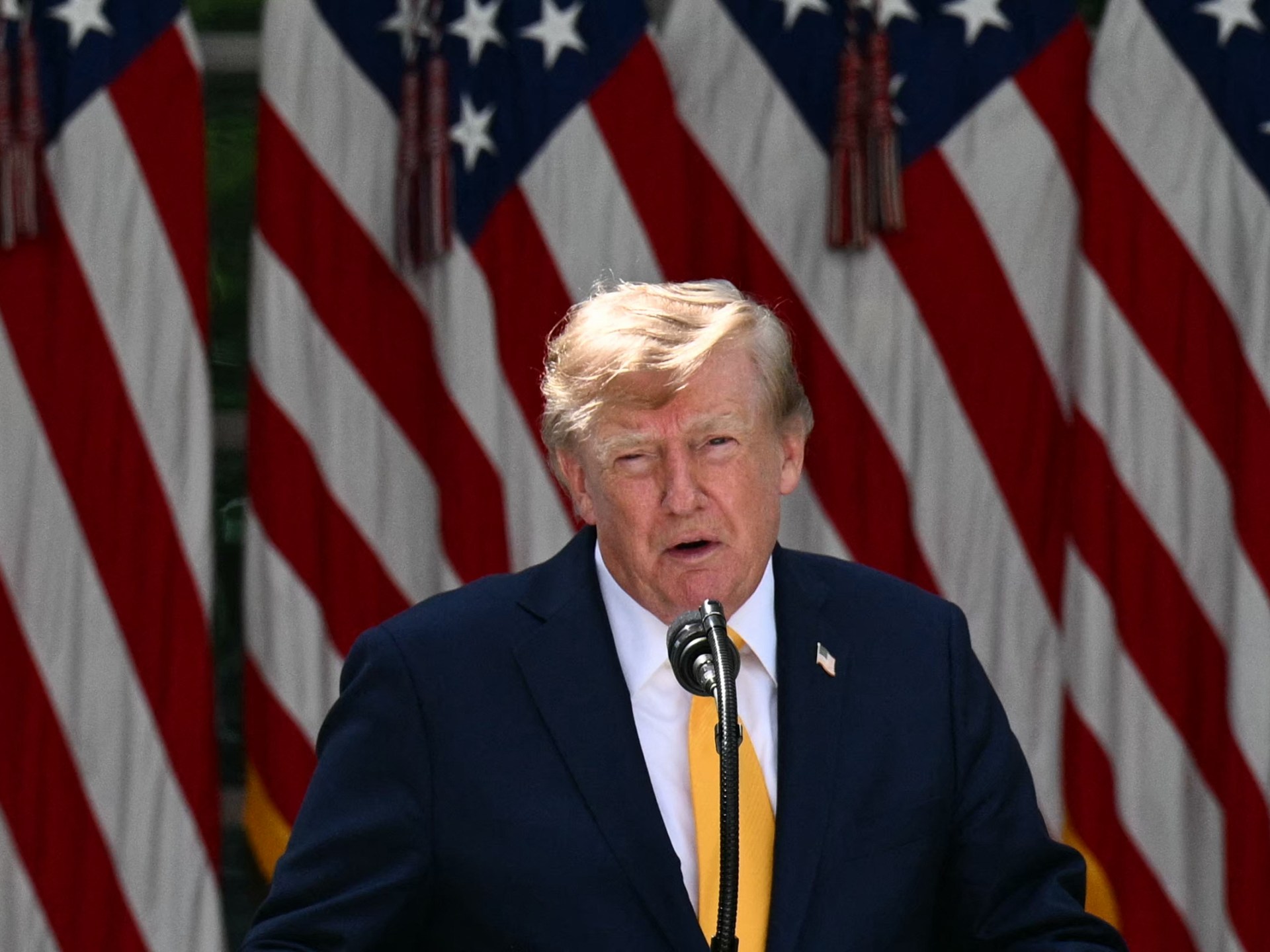
That has included $300m from the US, according to the Department of State. The administration of US President Donald Trump, who abducted Venezuelan leader Nicolas Maduro earlier this year, has continued to support the country’s interim President Delcy Rodriguez despite criticism over a lack of preparedness.
Reporting for Al Jazeera from Caracas, journalist Noris Soto said that international aid will be “more than necessary” in the months and weeks ahead.
“Venezuela has been struggling with economic hardships for the past two decades. So, if you add this disaster to that economic crisis that Venezuelans were already suffering, they will need help for years to come,” she said.
Related News
Trump says US will refill its petroleum reserves using Venezuelan oil
Abroad and at odds: How the war has divided Iranians in the diaspora
US public support for Iran war falls as Trump approval at record low: Poll