‘Paycheck to paycheck’: Texas border voters shed parties amid economic woes
 31 October 2026
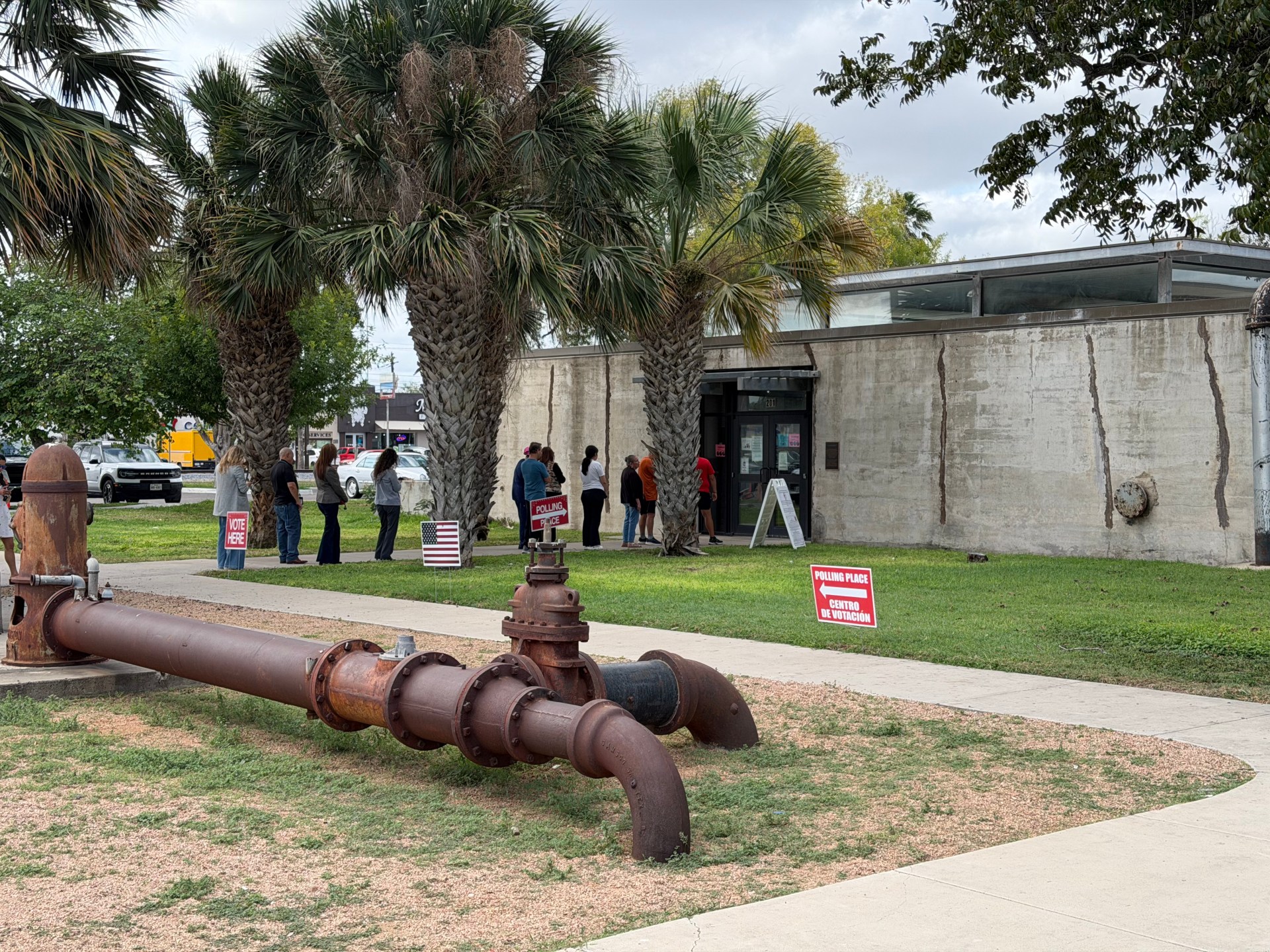

Rio Grande Valley, Texas – Jesus Robles sells mechanical bulls.
Mainstays of bars and dance halls, once used to train rodeo riders, the bucking behemoths point to the Rio Grande Valley’s history, where Mexican and Texan Ranchero culture have long intertwined.
- list 1 of 3Texas Republican group seeks to block certification of state’s election
- list 2 of 3Trump administration renews bid to block Alaska election results
- list 3 of 3US weighs new Iran strikes as Vance reaches out: Is war or a deal closer?
end of list
But the business has also been a nagging reminder of Robles’s 2024 vote, when he cast his ballot for US President Donald Trump, expecting an economic boost that would allow the company to flourish.
“I have lost tonnes of business due to our president right now,” he said, blaming Trump’s tariffs and rising fuel prices. “I ship a lot. The price of freight has doubled…. Some of my clients have been affected by immigration raids.”
Voters like Robles in 2024 helped reinforce the notion that the Rio Grande Valley, a Latino-dominated area long seen as reliably Democratic, was shifting Republican, bucking liberal hopes the ever-growing demographic would finally turn Texas blue.
His about-face in 2026, he said, underscored that no party should take voters in the region for granted.
“We focus on other countries. We focus on taxes,” said Robles, who cast his ballot on the final day of early voting in Alamo, Texas, about 50km (30 miles) from the US-Mexico border.
“But at the end of the day, I don’t feel none of these governments really help us, the people,” he added. “Because trust me, we work hard, the middle-class people work hard, and we’re the ones that get screwed the most.”
‘I did vote for Trump’
The Rio Grande Valley has become a battleground within a battleground this election season, with Republicans eyeing Trump’s 2024 gains – in which he won 14 of the 18 counties along the US-Mexico border – as evidence of a wider red shift.
Advertisement
They have set their sights on flipping at least two Democratic-controlled seats along the border, currently held by Representatives Vicente Gonzalez and Henry Cuellar, while holding onto a third, held by Republican Monica de la Cruz.
Democrats, riding on Trump’s high disapproval ratings among Latinos, who account for about 40 percent of the state’s population, are hoping to elect the first member of the party to statewide office in Texas since 1994. Democratic Senate candidate James Talarico is running against Republican state Attorney General Ken Paxton. Democratic gubernatorial candidate Gina Hinojosa, meanwhile, is seeking to unseat Republican incumbent Greg Abbott.
While once considered a Democratic workhorse, the Rio Grande Valley has found itself increasingly out of step with both political parties, according to Alvaro Corral, an assistant professor of politics at the University of Texas Rio Grande Valley.

Many have drifted away from a Democratic Party once embodied in figures like former President Bill Clinton, who captured “a mixture of traditional working-class economic platform that we associate with the Democratic Party, the New Deal Democrat sort of style, mixed with a little bit of, like, social conservatism, and being quite law-and-order focused”, Corral explained.
Some voters, in turn, found common ground in the religiously-dominated economic populism of Trump’s Republican Party, Corral said, only to find themselves alienated by his administration’s aggressive domestic immigration enforcement and a lack of pocketbook relief.
At the Alamo polling site, 40-year-old Natalie, an education worker who declined to give her last name out of professional concern, grimaced when she recounted her 2024 vote.
“I did vote for Trump,” she said. “It was immigration and the economy.”

But seeing her students grapple with family separation from Trump’s mass deportation drive, and watching the price of diesel to fuel her truck continue to tick up amid the US-Israel war on Iran, made her come to regret her vote.
“I just want people with empathy,” she said.
Voter Gabriel Ruiz pointed to the high cost of housing as a unifying issue, noting houses can cost between $400,000 and $500,000, a rate previously unheard of in the valley.
He said it has become common for voters to think beyond a party.
“It’s always going to be about the economy, job growth, being able to keep jobs here, and for the American people to flourish on their own and be able to afford housing, healthcare,” the 24-year-old said.
Advertisement
‘Paycheck to paycheck here’
Michael Mireles, the director of civil engagement at La Union Del Pueblo Entero (LUPE), a local organisation that works to turn out Latino voters, said 2024 was, in part, a result of Democrats failing to conduct meaningful outreach in the Rio Grande Valley.
Only about 40 percent of registered voters cast ballots that year.
“Democrats in the last cycle, they were not trying to reach new voters. They were not trying to talk to people who are typically left out of Valley politics, which I think is a huge mistake,” he said.
“Because the work that needs to happen is with the people who have not been activated politically.”

Advocates believe the region is ripe for that kind of engagement.
The poverty level in the Rio Grande Valley hovers around 21 percent, the highest rate in the state and twice the national rate. It has remained nearly unchanged for a decade. As of 2023, about 37 percent of Rio Grande Valley residents did not have health insurance.
The Rio Grande Valley also has the highest concentration of so-called “colonias” of any part of the state. Colonias began as informal settlements in the 1950s, with the majority of modern residents US citizens.
About 1,200 colonias in the area are typically unincorporated neighbourhoods, meaning they do not fall under local jurisdictions and can lack basic infrastructure.
LUPE is among the groups that do voter outreach and education in those neighbourhoods.
Speaking to Al Jazeera from her home on the Erling colonia in Donna, Texas, 36-year-old Angeles Arguelles recounted not taking her sick children to the doctor recently because she could not afford the medication. Her husband works two jobs as a dishwasher, and the family has no insurance.
Despite being a US citizen, she said she has never voted.
“It just feels corrupt,” she said. “I just keep to myself and my family.”

At a nearby colonia in the city of Edinburg, 52-year-old Mario Hernandez, a restaurant worker, said his neighbourhood has become increasingly politically engaged.
“I’m not a Republican. I’m not Democrat. But it depends on who it is,” he said.
Hernandez said he had cast his ballot for all Democrats this year, motivated in part by concerns for his neighbours without health insurance.
“A lot of elderly can’t survive on their income,” he said. “Most of us live paycheck to paycheck here.”
Related News
Trump ordered to testify in $10bn BBC lawsuit discovery: What happens now?
Do Palestinians in Gaza expect anything to change after Israel’s election?
Christa Pike lawyers say she is speaking one week after failed execution