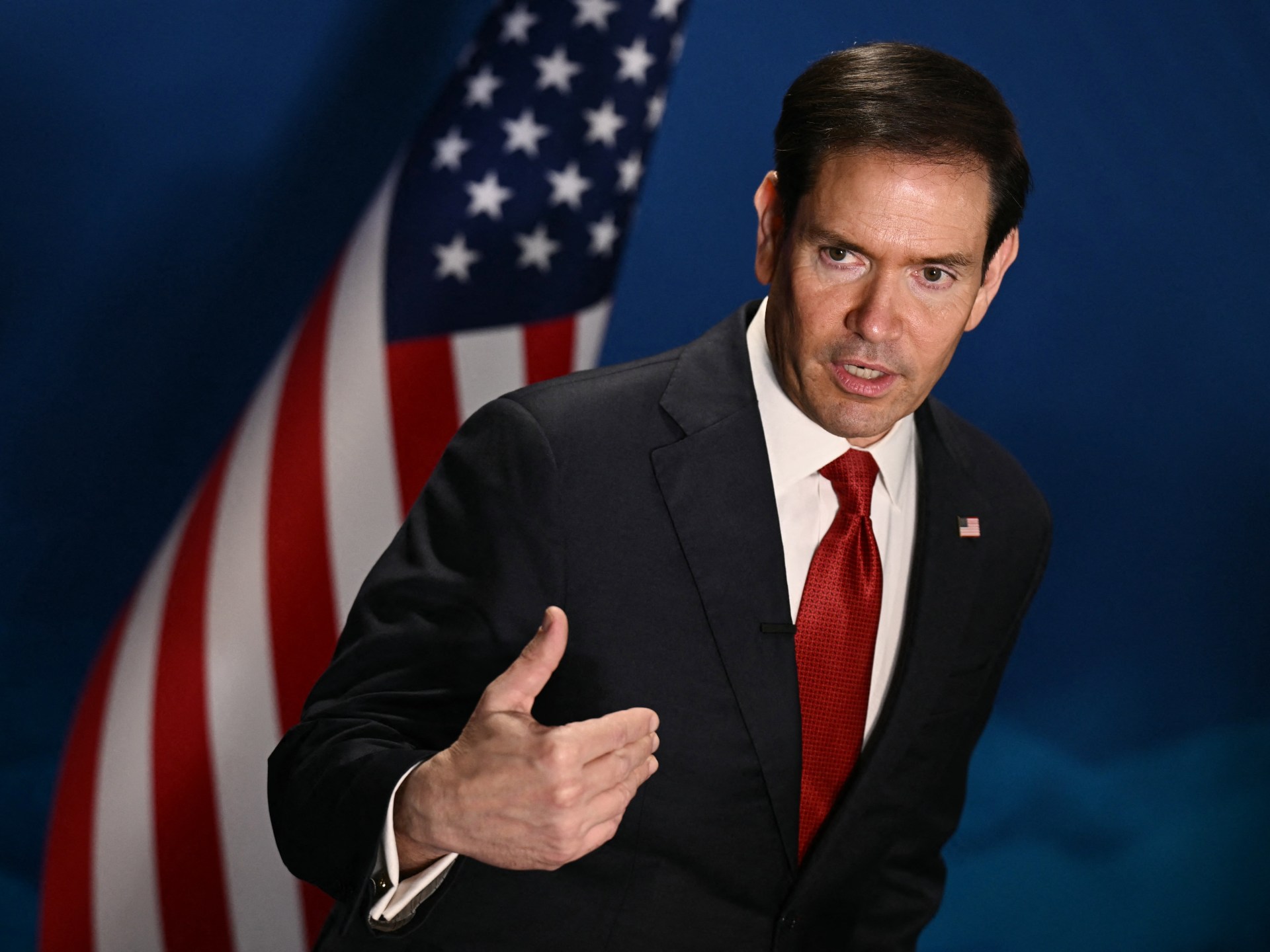

United States Secretary of State Marco Rubio says Iran is privately pressing Washington for a deal to end the war but Tehran is not yet “ready” to accept one,
“Iran is begging us, both directly and indirectly, ‘Let’s do a deal. Let’s talk,'” Rubio said, speaking to reporters on the sidelines of an Association of Southeast Asian Nations (ASEAN) meeting of foreign ministers in Manila, Philippines, on Thursday.
- list 1 of 3Will the war on Iran affect ASEAN’s efforts to tackle regional issues?
- list 2 of 3Travellers panic as US attacks Iran-Iraq border crossing
- list 3 of 3Iran, Houthis strike tankers as US bombing continues: What’s the latest?
end of list
“The problem with Iran is every time they make a deal, the people in charge either break it or they want to change it. So it looks like they’re not ready to make a deal, so they’re going to continue to pay a price, and every night the price gets higher and higher.”
Rubio described Iran as “a country run by radical clerics”, calling them “oblivious” to its economic problems.
“Iran can be the richest country in the Middle East if they wanted to be. But instead, they take their money, and they use it and they give it to Hezbollah. They give it to Hamas. They give it to the Houthis. They give it to Shia militias. They give it to sponsored terrorism all over the world,” he said, referring to Tehran-aligned or -supported groups in the region.
Asked about Iranian officials who have described their military policy with the US as “an eye for an eye”, Rubio said US President Donald Trump’s approach was “a head for an eye”.
Iran “will pay a very heavy price for the things they are doing. They are already paying a heavy price,” he said, claiming Iran’s industrial infrastructure was being “decimated”, resulting in “billions” of dollars in damage.
Advertisement
Washington’s central objective, Rubio said, remained a denuclearised Iran. “Our number one interest and the threat they pose to the world is these lunatics in possession of a nuclear weapon, and that’s not going to happen,” he said.
Rubio also denied Russia has been helping Iran with its weapons programmes and said Yemen’s Houthi movement had been “snookered” by Iran into targeting Saudi Arabia-linked shipping after staying out of direct involvement earlier in the conflict. “I hope that they’ll stop,” he said. “They shouldn’t really do that.”
The US signed a memorandum of understanding (MoU) with Iran last month, something Tehran says Washington has repeatedly violated. Both sides have indicated the agreement in effect is over.
For the past 12 nights, the US has launched strikes on Iran that it says are aimed at degrading the Iranian military’s ability to hit vessels in regional waters. However, Tehran says civilian infrastructure has been hit. The latest strikes hit the passenger terminal at the Shalamcheh border crossing with Iraq, killing two people and injuring others.
In response to the strikes, Iran has been launching attacks on US military assets located across the Middle East.
Iranian Ministry of Foreign Affairs spokesperson Esmaeil Baghaei on Thursday rejected any justification for US strikes on infrastructure, writing on X that targeting bridges and power plants amounts to unlawful reprisal and collective punishment under international humanitarian law.
He argued that citing superiors’ orders does not shield perpetrators from criminal liability, pointing to the US War Crimes Act and military legal codes as requiring service members to refuse “manifestly unlawful” orders. Iran, he said, “stands firm and resolute against lawlessness”.
Speaking to Al Jazeera, Zeidon Alkinani, founding director of the Arab Perspectives Institute, said Iran was using “very similar rhetoric” to Washington’s.
“They also want a deal, and the Americans are not serious about a deal,” he said. “This just indicates that the tit for tat will continue in parallel to the actual conflict on the ground.”
On the Houthis, Alkinani pointed to the group’s recent silence on Iran. “There wasn’t any mention of Iran, which means that the Houthis would want to reassess and recalculate their reality,” he said, adding that Rubio’s comments “might indicate a US willingness to finally negotiate with the Houthis as if the Houthis indicate that they want a new deal that is autonomous” from Tehran.
Advertisement
Related News
Israel arrests nine at Tel Aviv protest against West Bank settler violence
Senate panel votes to hold former official Fauci in contempt of Congress
Poland protests to Russian ambassador over missile incursion