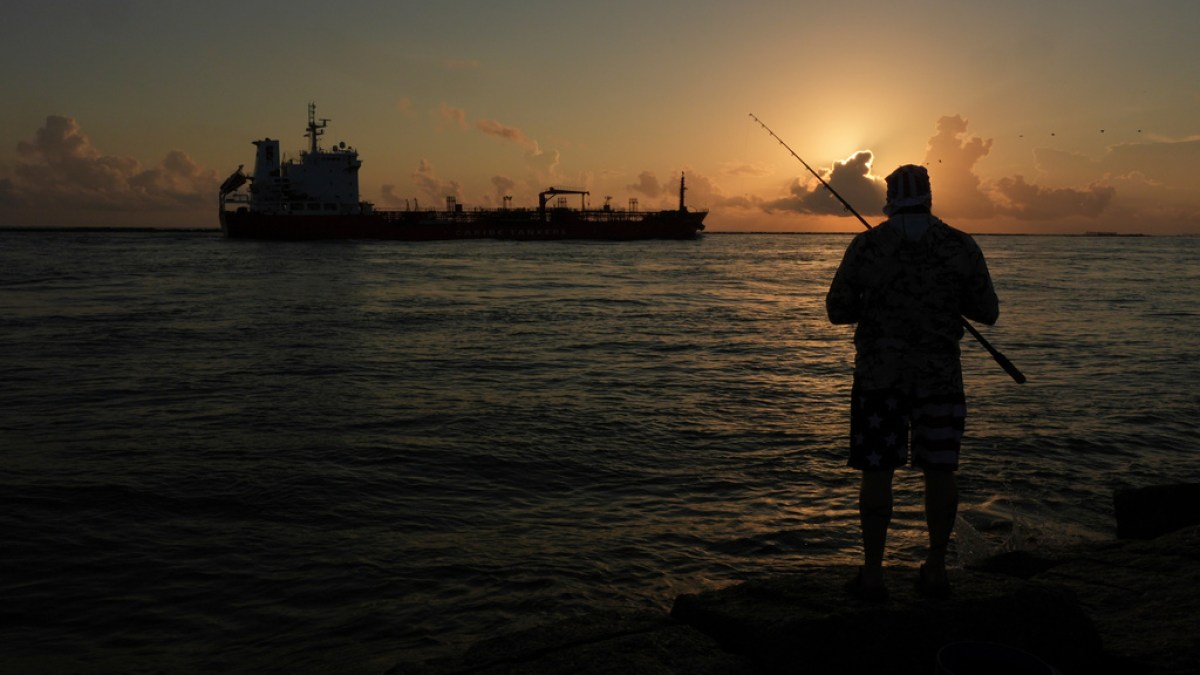

A committee with ties to United States President Donald Trump has exempted oil and gas drillers in the Gulf of Mexico from protections under the Endangered Species Act meant to safeguard vulnerable species.
On Tuesday, the government’s Endangered Species Committee convened for a rare meeting to weigh whether the protections should be lifted.
- list 1 of 3Wildlife killed, reefs damaged in ‘active’ Gulf of Mexico oil spill
- list 2 of 3Which countries have strategic oil reserves – and how much?
- list 3 of 3Trump announces new offshore drilling projects despite bipartisan pushback
end of list
The panel, composed of six senior Trump officials, ultimately voted unanimously in favour of lifting the restrictions.
Secretary of Defense Pete Hegseth told the meeting that environmental rules could hobble US energy production as the ongoing war on Iran snarls energy markets.
“Disruptions to Gulf oil production doesn’t hurt just us. It benefits our adversaries,” Hegseth said.
“We cannot allow our own rules to weaken our standing and strengthen those who wish to harm us. When development in the Gulf is chilled, we are prevented from producing the energy we need as a country and as a department.”
But environmental groups have objected to the decision, and a legal fight is expected in the coming months.
This is only the fourth time in US history that the Endangered Species Committee has convened, and Tuesday marks the third time it has granted an exemption to the Endangered Species Act.
Considered a landmark piece of legislation, the Endangered Species Act of 1973 prohibits actions that might kill or harm species close to extinction or their habitats.
The act has been invoked in the Gulf of Mexico to protect vulnerable species like Rice’s whale, which is found exclusively in the ecosystem. Scientists estimate that only about 50 of the rare whales remain.
Advertisement
Birds, sea turtles and Gulf sturgeon are also among the local species protected by the act.
Hegseth first requested a convening of the Endangered Species Committee on March 13, arguing that increasing oil and gas production in the Gulf of Mexico was necessary for “reasons of national security”.
But critics have dubbed the committee a “god squad”, a reference to the power it holds over a species’ continued existence.
Tuesday’s committee was staffed by Trump appointees, including Secretary of the Interior Doug Burgum and Secretary of Agriculture Brooke Rollins.
Advocates have promised to challenge the exemptions, arguing that the Trump administration failed to abide by the protocols set out under the Endangered Species Act. They also question whether the rationale for Tuesday’s exemption is justified by facts.
“The Endangered Species Act has not slowed an iota of oil from being extracted from the Gulf,” said Andrew Bowman, the president of the advocacy group Defenders of Wildlife. “I cannot stress enough how unprecedented and unlawful this action is.”
Environmental protections have been a low priority for the Trump administration, which has rolled back existing rules and championed pro-fossil fuel policies, while dismissing climate change as a “hoax”.
“If Trump is successful here, he could be the first person in history to knowingly extirpate a species from the face of the earth,” Patrick Parenteau, emeritus professor of law at Vermont Law School, told The Associated Press. “That’s how precarious the condition of the Rice’s whale is.”
Related News
Colombia’s President Gustavo Petro under investigation in US for drug ties
Iran war live: US demands Tehran accept defeat; Israel pounds Lebanon

War on Iran: US’s history of making other nations pay for conflicts