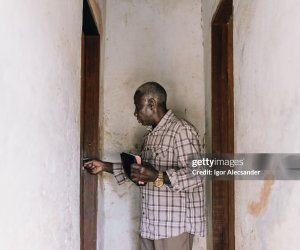


News Americas, NEW YORK, NY, Sat. July 11, 2026: An elderly man once stood outside a church long after the doors had closed. He was not wrestling with belief in God. He was wrestling with belief in the people who represent God. It was church hurt. Years earlier, he had entered that space in crisis, expecting refuge. What he encountered instead was distance that felt justified, silence that felt spiritual, and structure that felt more important than suffering. He left with faith intact but trust fractured.
Years later he returned. The building had not changed. The culture had. A child saw him first, walked toward him without hesitation, and said, you can sit here. Nothing was explained. Nothing needed to be. Belonging had already been communicated through action. In that moment, trust began to return through experience, not instruction.
Church hurt is not an event. It is what happens when Christ is proclaimed but culture is not formed to reflect His character. It is not primarily personal offense. It is institutional misalignment between what is believed and what is consistently practiced.
Church hurt is never random. It is produced. Not always intentionally, but always structurally. It emerges where patterns are unexamined, where silence is rewarded, where harm is absorbed rather than addressed, and where love is affirmed more in language than in systems. People are formed more by what is tolerated than by what is taught. Culture is what leadership allows when it is not actively correcting itself. It is revealed in who is believed, who is protected, who is dismissed, and who must repeatedly justify their pain before it is acknowledged.
Church hurt begins long before it is named. It begins in repetition. Repeated experience becomes normal. Normal becomes expectation. Expectation becomes interpretation. Interpretation becomes identity. By the time people speak about hurt, they are describing what a system has already trained them to endure.
Three forces determine whether a church becomes healing or harmful. Character shapes behavior. Culture shapes expectation. Systems shape outcomes. When any one of these is misaligned, trust erodes even when intentions remain sincere. Unaddressed harm becomes institutional memory. This is why church hurt is not corrected through intention but through design. A church can be theologically precise and experientially damaging at the same time when its internal patterns are not corrected.
The deepest fracture appears when confession and culture diverge. Grace is spoken but not structured. Truth is affirmed but not embodied. Unity is declared but not protected. People do not leave because faith collapses. They leave because restoration has no reliable pathway. Healthy churches are not defined by the absence of failure but by the presence of repair. They design culture with intention rather than assumption. Care becomes consistent. Accountability becomes protective. Leadership becomes relational. Trust becomes cumulative. Love ceases to function as language and becomes environment.
Doctrine forms belief. Culture forms experience. Experience, repeated over time, becomes interpretation. This is why behavior will always reveal what belief systems alone cannot guarantee. The measure of a church is not how strongly it speaks in public gatherings, but how faithfully it repairs when harm occurs in private spaces. A healthy church is recognizable when truth can be spoken without fear and dignity is not dependent on proximity to power.
The man who once stood outside eventually returned repeatedly. What changed was not perfection. What changed was pattern. He was no longer managed as a disruption. He was received as a person. That consistency rebuilt trust more than any explanation ever could. Church hurt ends where culture is intentionally designed to reflect Christ in practice rather than in proclamation. Where that alignment exists, church becomes more than an institution people attend. It becomes a living environment where truth and love are no longer in competition and where human beings are given the conditions to become whole.