Is Ethiopia on the verge of another civil war as fighting erupts in Tigray?
 26 September 2026
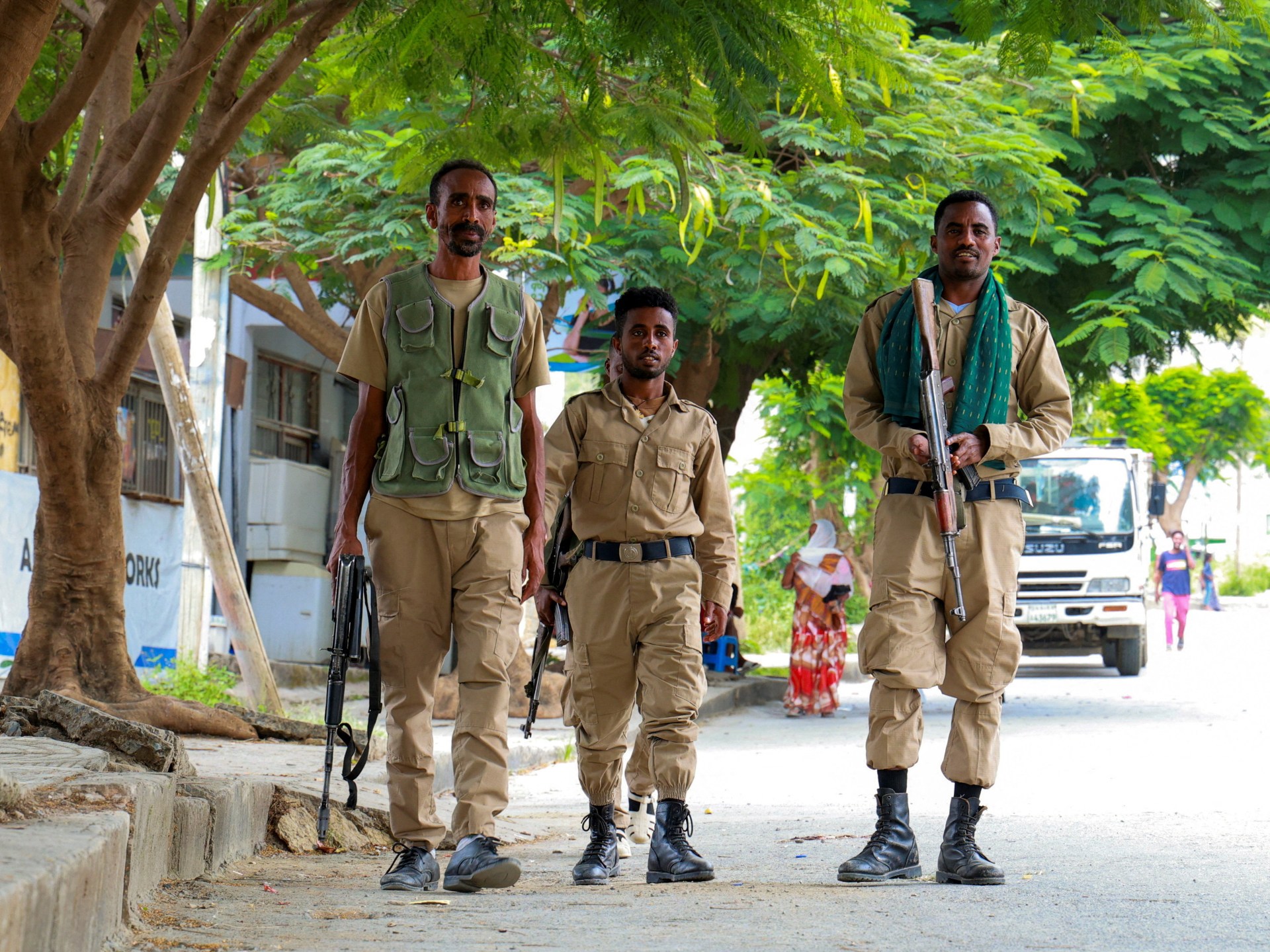

Intensified fighting between Ethiopia’s federal army and forces from the northern region of Tigray has raised fears that the peace agreement that ended a devastating two-year war in 2022 could collapse.
The escalation came days after seven armed groups from across Ethiopia formed a new alliance which seeks to remove Prime Minister Abiy Ahmed’s government, with each side of the conflict blaming the other for instigating the latest flare-up in violence.
- list 1 of 4Pressure to boycott Israel game grows as Ireland preparations stall
- list 2 of 4Ebola spreads in DR Congo, putting neighbouring nations at risk
- list 3 of 4Pezeshkian says Iran ‘no longer trusts talks with Washington’
- list 4 of 4Suicide bombing in Pakistan’s Dera Ismail Khan kills at least 12 people
end of list
The immediate fear for many in the country is a return to the war they have spent nearly four years trying to recover from. Here is what we know.
How did Ethiopia reach this point?
The Tigray People’s Liberation Front, or TPLF, began as an armed movement against Ethiopia’s military government in the 1970s. It later became the dominant force in the coalition that governed Ethiopia for nearly three decades.
That influence was contentious in a country with many ethnic groups, where Tigrayans account for only about 6 percent of Ethiopia’s population. When Abiy became prime minister in 2018, he created the Prosperity Party to replace the governing coalition, sharply reducing the TPLF’s influence at the centre of government.
Relations between Abiy’s government and the TPLF deteriorated until war broke out in November 2020. Federal troops, Eritrean forces and some fighters from the neighbouring Amhara region fought against Tigrayan forces. The conflict killed hundreds of thousands of people, displaced millions and left Tigray largely cut off from the outside world.
Advertisement
A peace agreement signed in Pretoria, South Africa, in November 2022 ended the full-scale war. But it did not settle some of the disputes that had helped fuel it.

What has driven the renewed fighting?
One of the deepest disputes concerns western Tigray. Fighters from the neighbouring Amhara region, who fought alongside Ethiopia’s federal army during the 2020-2022 war, took control of western Tigray. Hundreds of thousands of Tigrayans were driven from their homes, and Tigrayan leaders now want the territory returned and those displaced to be allowed to return to their homes.
Many in Amhara reject Tigray’s claim to the territory, however. They argue that western Tigray should not have been incorporated into Tigray when Ethiopia’s regional boundaries were redrawn in 1992, after the fall of the military government.
That dispute is ongoing, even though the TPLF and the Amhara Fano National Movement have now joined the same alliance against Abiy Ahmed’s government.
The federal government also says Tigrayan forces have retained weapons they were meant to surrender. Tigrayan leaders, in turn, say the government has failed to secure the withdrawal of other forces or enable displaced people to return home, particularly to western Tigray.
The political arrangements made after the war have also broken down. The TPLF faction led by Debretsion Gebremichael retook control of Tigray’s administration earlier this year, displacing an interim administration established under the peace agreement.
“Since the end of the war, while the Pretoria Agreement has held, there have been consistent violations on both sides,” Jervin Naidoo, a senior political analyst at Oxford Economics Africa, told Al Jazeera. He said Tigrayans remained aggrieved over western Tigray, the presence of outside forces and the region’s autonomy.
The government sees the TPLF differently. Naidoo said it would portray the group as “a belligerent group trying to destabilise Ethiopia”. But for Tigrayan leaders, he said, renewed fighting could be presented as a matter of protecting their region.
Who is in the new alliance?
The Ethiopian Peoples’ Forces Alliance for Survival was announced this month by seven armed movements. Its largest members include the TPLF, the Amhara Fano National Movement and the Oromo Liberation Army (OLA). It also includes groups from Ethiopia’s Somali, Afar and Benishangul-Gumuz areas.
They have different aims and histories, but share a stated objective – to remove Abiy’s government.
Advertisement
Their agreement marks a striking reversal of the alliances formed during the last war, with Fano fighters who fought alongside federal troops against the TPLF now fighting alongside the TPLF.
The Pretoria agreement helped reshape those relationships. It ended the war between Addis Ababa and the TPLF, but Eritrea and Amhara forces, which had supported the government, were not parties to it. Both later fell out with Abiy’s government.
The alliance extends beyond northern Ethiopia. The OLA has fought federal forces in Oromia, in central Ethiopia, since 2018, while a faction of the Ogaden National Liberation Front (ONLF) has joined despite a separate peace agreement signed with the government that year. The ONLF leadership inside Ethiopia’s Somali region says it is not part of the new coalition.
Common opposition to Abiy does not mean the groups agree on Ethiopia’s future. Tigrayan and Amhara members still have competing claims to western Tigray. The government has also accused Eritrea of backing the alliance. Eritrea has repeatedly denied supporting the armed groups.
What is happening on the ground?
Small-scale clashes and reported drone strikes preceded this week’s escalation. Fighting then intensified in southern Tigray and spread into the neighbouring Afar and Amhara regions.
Each side blames the other for starting the latest major clashes. Tigrayan forces say they responded to a federal offensive involving ground troops and drones. The government side accuses the TPLF of attacking first. With the fighting continuing, claims about individual attacks and territorial gains are difficult to verify independently.
“There has been overnight fighting in the border town of Abala,” Al Jazeera’s Catherine Soi reported from Kenya. The town, located in northern Afar on the border with Tigray, was also affected by the previous war. Reports have differed over who controls the town. On a separate front in Amhara, Ethiopia’s army says it killed more than 270 rebel fighters. That figure has not been independently verified.
Tigrayan forces have taken control of the airports at Mekelle, Axum and Shire, disrupting civilian flights. The African Union says the seizure is inconsistent with the Pretoria agreement. About three-quarters of a million people remained displaced within Tigray because of the earlier war before this latest escalation.
Could it become a wider war?
There is a risk it could, but analysts say the conflict has not descended into a full-scale civil war yet. Fighting has crossed Tigray’s borders, and the federal government is already facing armed conflicts in other regions.
There is also a chance of regional escalation. Eritrea fought alongside the Ethiopian government during the previous Tigray war, but relations between the neighbours have since deteriorated, partly over Abiy’s push for access to Red Sea ports. Addis Ababa accuses Eritrea of supporting armed groups inside Ethiopia.
The African Union has called for an immediate halt to the escalation and for renewed talks under the Pretoria agreement. It has asked former Nigerian President Olusegun Obasanjo, who helped mediate the 2022 deal, to engage the parties urgently. The East African bloc IGAD has also urged neighbouring countries to avoid actions that could make the crisis worse.
Related News
US revises statements suggesting Chinese hackers attacked agencies
India summons Pakistani diplomat after incident in Arabian Sea

US holds memorials for the 9/11 attacks, 25 years later