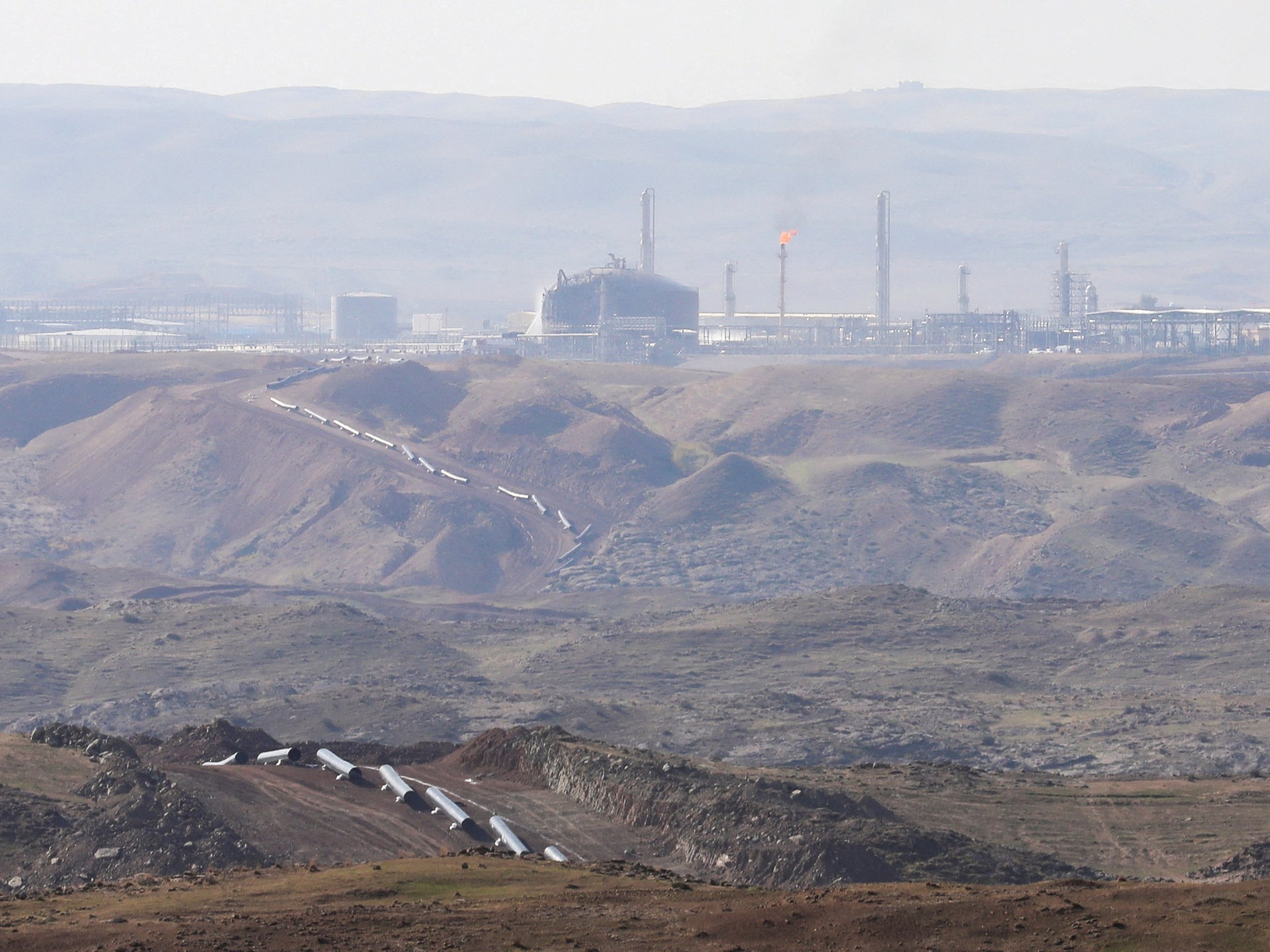

A drone attack on the Khor Mor gasfield in the semi-autonomous Kurdish region of northern Iraq has caused a fire at the facility and cut power to the region, according to Iraqi and Kurdish officials.
The Sunday night attack left more than 70 percent of the Kurdish region without power.
- list 1 of 3External parties using Iraq to launch attacks on neighbours: Iraqi FM
- list 2 of 3Could Iraq’s Kurdish region return to two separate administrations?
- list 3 of 3US aims to cut off Iran’s transport of advanced weapons: What we know
end of list
It was not clear who was responsible for the attack or whether it was related to the United States and Israel’s war on Iran.
Al Jazeera’s fact-checking agency Sanad has verified footage of smoke and flames rising from the vicinity of the gasfield in the Sulaimaniyah governorate.
Omid Ahmed, spokesperson for the Kurdistan Regional Government’s Ministry of Electricity, said the attack suspended gas supply to power plants in the cities of Erbil, Sulaimaniyah, Bazian, Chamchamal and Duhok, the official Iraqi News Agency (INA) reported.
The strike knocked between 2,500 and 2,800 megawatts of electricity generation off the grid, he said.
He added that the ministry would provide electricity to critical facilities, such as hospitals and water treatment plants, by operating hydroelectric power stations and other plants that run on alternative fuel.
Al Jazeera’s Peter Smith, reporting from Baghdad, cited security sources as saying the explosive-laden drone struck the Khor Mor gas storage facility, reducing the energy grid’s capacity by 70 to 80 percent.
Iraqi Prime Minister Ali al-Zaidi said there were no casualties as a result of the attack, based on an initial assessment, the INA reported.
Al-Zaidi also directed that a joint investigative committee be formed with the relevant authorities in the Kurdish region to investigate the circumstances surrounding the attack, INA reported.
Advertisement
The attack comes amid heightened regional tensions. A drone strike hit the same facility last year, with no group having claimed responsibility.
Related News

The WhatsApp ‘general’ behind Lula’s election comeback in Brazil

The chatbot murder guide: AI’s struggle between privacy, reporting violence
‘Nobody can stop them’: Who are Europe’s Black Bloc protesters?