Syria confirms ‘mass escape’ from camp housing relatives of ISIL fighters
 26 February 2026
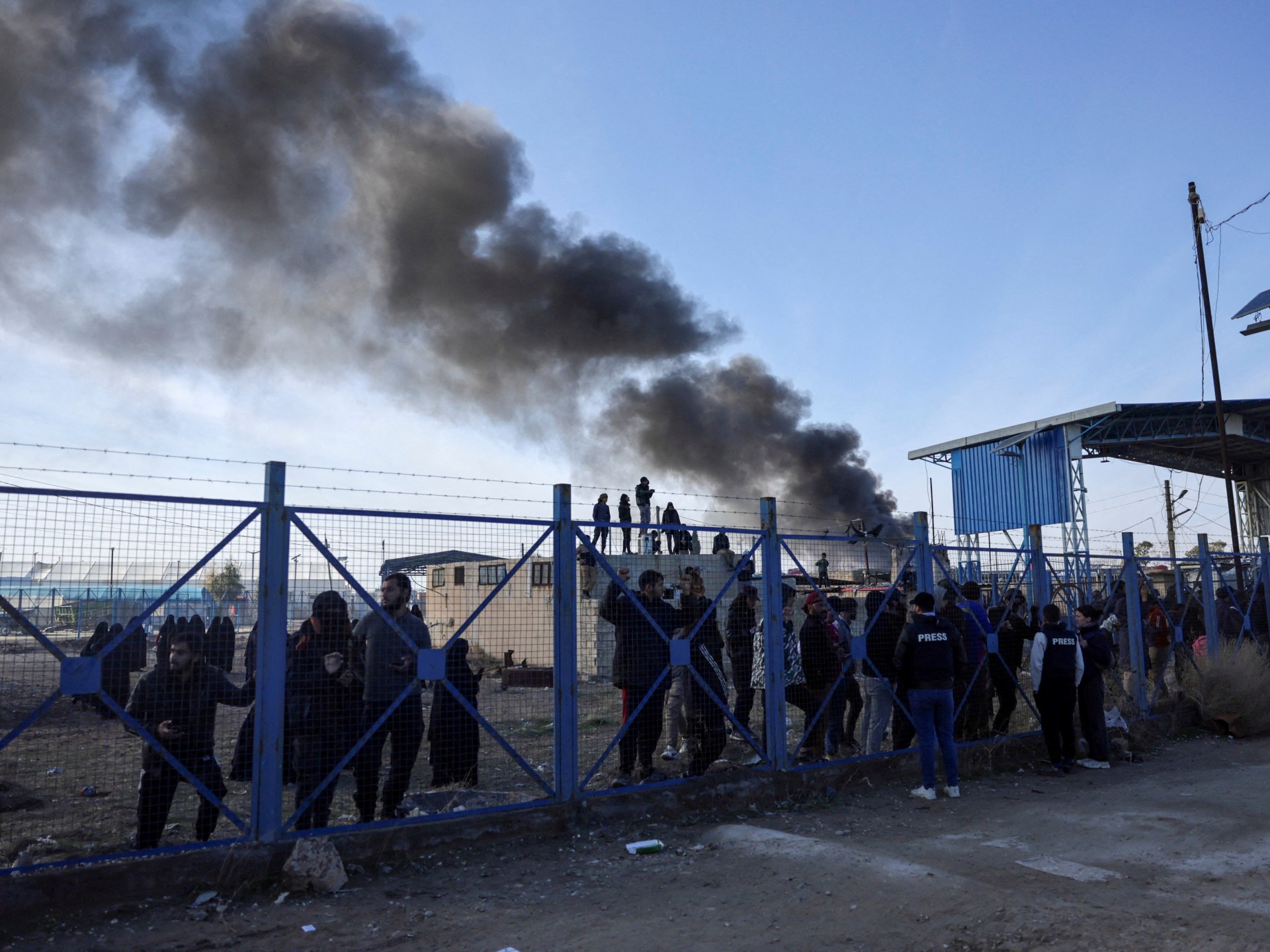

A Syrian official has confirmed “mass escapes” from a facility housing relatives of suspected ISIL (ISIS) fighters in northern Syria last month after the withdrawal of Kurdish-led forces who had previously controlled the camp.
Noureddine al-Baba, the spokesman for Syria’s Ministry of Interior, told reporters in Damascus on Wednesday that Syrian forces had discovered more than 138 breaches in the camp’s 17km (11-mile) perimeter wall.
- list 1 of 4Deadly fighting in Alawite heartland city in Syria
- list 2 of 4Syria faces twin battles as Assad loyalists and ISIL attack in west, east
- list 3 of 4Israel’s opposition leader voices support for ‘broad’ Middle East expansion
- list 4 of 4US begins withdrawing from its largest military base in Syria
end of list
“When our forces arrived, they found cases of collective escapes due to the camp having been opened up in a haphazard manner,” he said.
“We observed cases of mass escape resulting from the opening of internal berms and checkpoints of the camp,” he said.
Al-Hol, located in the Hasakah province near the border with Iraq, was the largest camp for relatives of suspected ISIL fighters in northeastern Syria and had been under the control of the Kurdish-led Syrian Democratic Forces (SDF).
According to the SDF, the camp held more than 23,000 people before its withdrawal.
The camp’s residents, most of whom were children, women and older people, were not technically prisoners and most have not been accused of crimes. But they had been in de facto detention at the heavily guarded facility for years.
Last month, the Syrian military drove the SDF from swaths of the north following deadly clashes amid a dispute over the integration of the Kurdish-led forces into Syrian state institutions. Under pressure, the SDF withdrew from the camp on January 20, with Syrian security forces taking control a few hours later.
Advertisement
“The SDF withdrew suddenly, without coordination and without informing” the Syrian authorities or the international anti-ISIL coalition beforehand, al-Baba said. There was a “chaotic situation” after the pullout, with “more than 138 breaches” discovered in the perimeter wall.
It was not immediately clear how many people in all have escaped from al-Hol camp.
Al-Baba told reporters that the vast majority of the camp’s residents were Syrians and Iraqis, and that 6,500 people from 44 other nationalities were also there.
He added that Syrian authorities have transferred many residents to the Akhtarin camp in Aleppo province, which is easier to be reached by aid agencies and where children will have proper education and rehabilitation.
Al Jazeera’s Heidi Pett, reporting from Damascus, said Syrian officials are disputing the SDF’s estimate of 23,000 people at al-Hol.
“The government is saying the figure was artificially inflated in order to secure more international support. They are saying they’ve managed to recapture most of those who escaped and that they’ve taken them to a camp in northern Aleppo province,” she said.
But only 1,100 families are confirmed there, against 6,600 who were at al-Hol before the SDF withdrew, leaving roughly 5,000 unaccounted for, she noted. They are believed to be scattered across rural Aleppo and Idlib, with some housed in apartments that were fundraised for on social media, others smuggled out by pre-existing networks, and some removed by foreign fighters.
The whereabouts of these women and children raises a dual concern: The security risk they may pose if linked to ISIL, and their own vulnerability having been taken from the camp by men unknown to them, Pett added.
For its part, the Kurdish-led SDF said in a statement that “the withdrawal of our forces was a direct result of the military attack … targeting the camp and its surroundings by forces affiliated with Damascus.” The release of ISIL families “occurred after the entry of Damascus-affiliated factions (into the camp) and involved their direct participation”, it added.
The fighting between the Syrian military and the SDF stopped after a ceasefire was reached last month.
Before the SDF withdrew from al-Hol and other areas in northern Syria, the United States military said it had transferred more than 5,700 detained ISIL suspects from Syrian prisons to Iraq.
ISIL swept across Syria and Iraq in 2014, committing massacres and forcing women and girls into sexual slavery.
Advertisement
Backed by US-led forces, Iraq proclaimed the defeat of ISIL in the country in 2017, and the SDF ultimately beat back the group in Syria two years later.
After ISIL’s defeat, about 73,000 people were living at al-Hol. The number has since declined, with some countries repatriating their citizens.
Al-Baba said Syria’s Ministry of Foreign Affairs is in contact with the governments of third-country citizens to discuss the next steps regarding them.
Related News
At least 28 people killed as Sudan paramilitary force tears through Darfur

Follow the vote: Bangladesh election live results 2026
Strike over labour reforms brings Argentina’s capital to a near-standstill