U.S. Gun Pipeline To Caribbean Exposed As Teacher Sentenced For Trafficking Weapons To Trinidad
 16 March 2026

News Americas, MIAMI, FL, Mon. March 16, 2026: A Florida high school teacher has been sentenced to more than a year in prison after admitting she helped purchase firearms that were ultimately smuggled into Trinidad and Tobago, highlighting growing concerns about the role of U.S. gun trafficking networks fueling crime across the Caribbean.
Shannon Nicole Samlalsingh, 47, was sentenced to one year and one day in federal prison after pleading guilty to conspiracy to make false statements to a firearm dealer, according to the U.S. Department of Justice.
U.S. District Judge William F. Jung also ordered Samlalsingh to forfeit the firearms she purchased as part of the scheme.
Federal prosecutors say Samlalsingh, who at the time was a Hillsborough County high school teacher in Tampa, purchased multiple weapons on behalf of a Trinidad-based transnational criminal organization.
Court documents show she falsely claimed on federal firearms purchase forms that the weapons were for her personal use. Instead, investigators say the guns were handed over to members of the criminal network and later smuggled into Trinidad and Tobago.
The case sheds light on the illegal flow of U.S. firearms into Caribbean nations, a growing regional security concern.
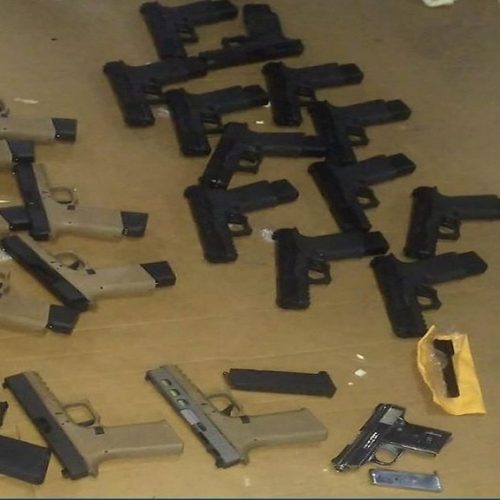
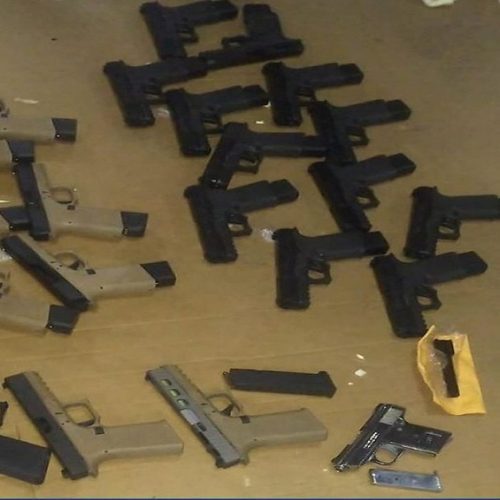
Authorities in Trinidad and Tobago intercepted part of the weapons shipment in April 2022 at Piarco International Airport. Customs officials discovered an alarming cache of weapons hidden inside two punching bags in a shipment arriving from the United States.
The seizure included:
• Eleven 9mm pistols
• Two .38 caliber revolvers
• A semi-automatic shotgun
• Multiple AR-15 components and magazines
• Hundreds of rounds of ammunition
Investigators determined that four of the seized pistols had been purchased directly by Samlalsingh.
The case was investigated by Homeland Security Investigations, (HSI) and the U.S. Bureau of Alcohol, Tobacco, Firearms, and Explosives (ATF), with assistance from the Trinidad and Tobago Police Service, U.S. Citizenship and Immigration Services, and other law enforcement agencies.
The prosecution comes at a time when Caribbean governments are intensifying calls for stronger cooperation with the United States to combat the flow of illegal weapons and narcotics through regional transshipment corridors.
In Trinidad and Tobago, authorities have been grappling with rising concerns over arms trafficking linked to organized crime networks.
Those concerns have also shaped broader regional security cooperation with Washington.
Last year, the United States deployed a military-grade radar system at ANR Robinson International Airport in Tobago aimed at helping local authorities detect drug trafficking flights and maritime smuggling routes, particularly those connected to Venezuela.
The radar, which used drone and satellite technology to monitor regional airspace, was part of a broader effort to strengthen surveillance across the southern Caribbean.
However, recent reports indicate the system has now been dismantled, with a U.S. military aircraft expected to transport the equipment out of Tobago.
The removal comes amid shifting regional security dynamics following the U.S. military’s detention of Venezuelan leader Nicolás Maduro earlier this year on drug-related charges.
Despite the radar’s removal, Trinidad and Tobago officials have continued to press Washington for increased security support.
Speaking at the Americas Counter Cartel Conference in Miami, Defence Minister Wayne Sturge called for additional U.S. assets to help Caribbean nations combat organized crime networks operating in the region.
“If we are to deliver effectively as the security anchor in the southern Caribbean, we require assets that would equip us with the capability to disrupt the cartels in the transshipment corridors,” Sturge said.
Cases like Samlalsingh’s illustrate the complex challenge Caribbean governments face – confronting criminal networks that rely heavily on weapons purchased legally in the United States before being trafficked south.
Security experts say the case underscores the need for stronger monitoring of firearms purchases and enhanced cooperation between U.S. and Caribbean law enforcement agencies to disrupt the illicit pipeline feeding regional crime.